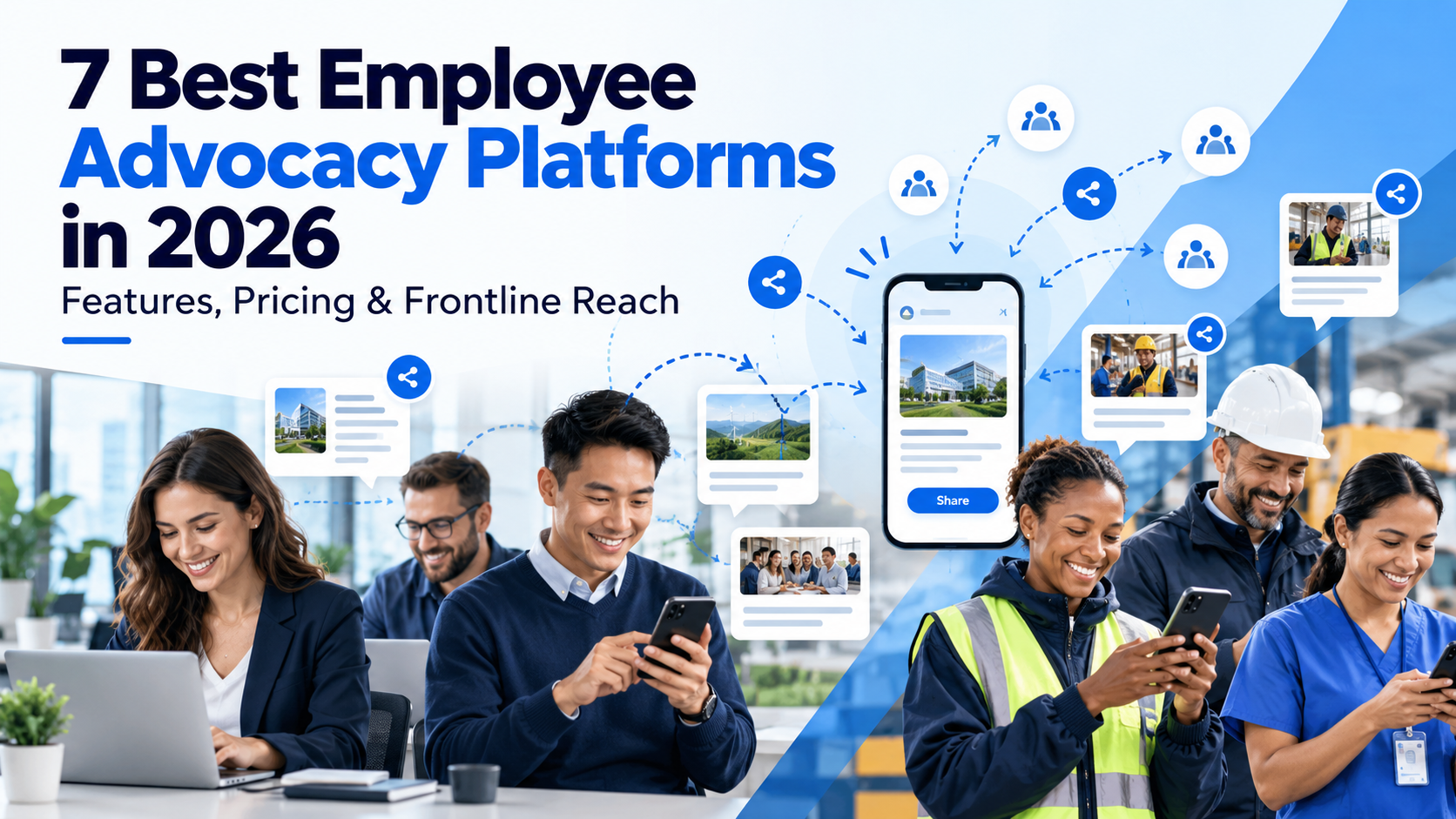
Employee advocacy platforms help employees share approved company news, industry insights, job opportunities, and other content through their personal social networks. The best options in 2026 include HubEngage, Sociabble, EveryoneSocial, DSMN8, GaggleAMP, Oktopost, and Parliament by Hootsuite.
These platforms serve different needs. Sociabble combines employee advocacy with documented access for employees without corporate email. EveryoneSocial, DSMN8, GaggleAMP, Oktopost, and Parliament offer more specialized social-sharing tools. HubEngage approaches the problem from internal communications, helping organizations reach frontline staff before asking them to participate in broader campaigns.
That distinction matters. A mobile app is not automatically a frontline-ready advocacy platform, and the ability to share content inside an employee app is not the same as sharing it on LinkedIn, Facebook, or Instagram.
Why Frontline Reach Matters for Employee Advocacy
Employee advocacy programs often begin with marketing, sales, recruiting, and leadership teams. These employees usually have corporate email addresses, access to collaboration software, and professional social media profiles. Store associates, manufacturing workers, drivers, healthcare staff, and hospitality teams may have none of those things.
The result is an avoidable gap between the people creating an organization’s public image and the employees who interact with customers every day.
LinkedIn’s guidance on employer branding emphasizes the role employees can play in showing what an organization is actually like. Meanwhile, Edelman’s 2026 Trust at Work research underscores why trust inside organizations matters.
For employers with distributed workforces, the first challenge is often simply making information accessible. Our guide to improving frontline employee communication covers that foundation in more detail.
Employee Advocacy Platforms Compared: Features, Pricing, and Frontline Reach
| Platform | Best For | Standout Feature | Frontline Reach | Pricing Model |
|---|---|---|---|---|
| HubEngage | Organizations prioritizing frontline communications and participation | Employee social hub connected with mobile communications and engagement tools | Yes for internal reach; external advocacy unverified | Custom quote |
| Sociabble | Companies wanting both deskless access and external social advocacy | Employee advocacy with mobile access for workers without corporate email | Yes | Custom quote |
| EveryoneSocial | Enterprise-wide advocacy and employee-generated content | Content distribution, social sharing, and employee advocacy analytics | Limited | Custom quote, based on registered users |
| DSMN8 | Marketing and employer branding teams running structured advocacy campaigns | Curated content libraries, employee sharing, and campaign reporting | Limited | Custom quote |
| GaggleAMP | Teams that need specific employee social engagement actions | Assigned sharing activities, engagement actions, and reporting | Limited | Custom quote based on company size |
| Oktopost | B2B organizations connecting advocacy with social media marketing | Employee advocacy within a wider B2B social media management platform | Limited | Custom quote |
| Parliament by Hootsuite | Existing Hootsuite customers seeking employee advocacy | Approved employee sharing within Hootsuite’s broader social platform | Limited | Custom enterprise quote |
How to read the frontline column: Yes means the vendor documents a credible route for frontline employees to access the relevant content, with external advocacy capabilities where specified. Limited does not mean the platform lacks a mobile app. It means we could verify mobile advocacy capabilities but could not establish a complete, corporate-email-free onboarding and participation process from public documentation.
HubEngage needs an additional distinction: its documented strength is delivering and discussing content within the workforce. Its external employee-to-social-network sharing workflow could not be independently verified from the public product materials reviewed.
Pricing and capabilities were checked against publicly available vendor information for October 2026. The assessment is based on product documentation, not hands-on software testing.
1. HubEngage — Best for Connecting Frontline Communications With Employee Participation
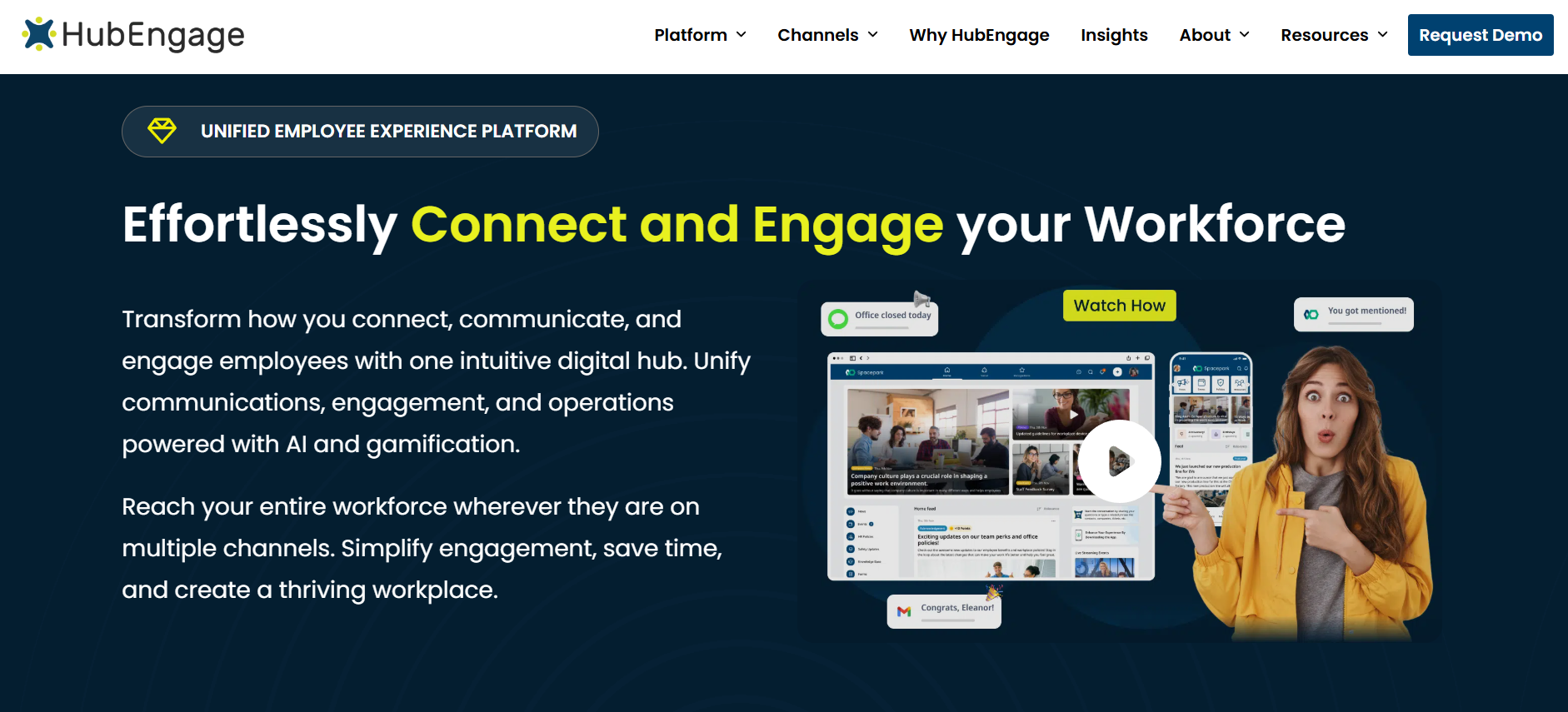
HubEngage is an employee communications and engagement platform rather than a dedicated social media advocacy product. Its employee social hub allows organizations to share updates, encourage employee contributions, support discussions, and distribute information across a workforce that may not spend the day at a computer.
For organizations with a large deskless population, that starting point can be useful. Employees cannot meaningfully support a company story they never see.
What HubEngage offers
The HubEngage Social Hub supports employee-facing social interactions, including posts, comments, reactions, and content contributions. The wider platform brings those activities alongside other employee communication and engagement functions.
Relevant capabilities include:
- Employee social feeds: Share company announcements, team updates, employee stories, and other content within an internal social environment.
- Mobile-first communications: Deliver information through an employee app rather than relying exclusively on desktop intranets.
- Multiple communication channels: The wider platform supports options such as employee mobile apps, web access, SMS, and digital displays.
- Employee-generated content: Encourage staff to contribute photos, videos, updates, and workplace experiences.
- Recognition and engagement tools: Connect workplace participation with employee recognition and other engagement activities.
These features make HubEngage particularly relevant to companies where internal awareness and participation are prerequisites for a successful advocacy initiative.
How well does it reach frontline employees?
Internal frontline reach is a documented strength. HubEngage provides mobile communication tools and additional channels for reaching employees beyond traditional email-based communication. That makes it relevant to retail, healthcare, manufacturing, hospitality, and other distributed workforces.
However, an important limitation remains: the reviewed public documentation establishes internal social sharing, not a dedicated workflow for publishing approved content directly from employees’ personal LinkedIn, Facebook, or Instagram accounts.
Organizations should therefore ask HubEngage to demonstrate any proposed external advocacy workflow rather than assuming its internal social hub provides the same functionality as a specialist employee advocacy platform.
Pricing and fit
HubEngage uses custom pricing. The cost depends on factors such as workforce size, selected capabilities, and implementation requirements. A standardized public price for employee advocacy specifically was not available.
Choose HubEngage if: Your immediate goal is to improve the distribution of employee stories, announcements, and engagement campaigns across a frontline workforce, with external social advocacy treated as a separate requirement to verify.
Consider another platform if: You primarily need preapproved social-sharing templates, personal social account integrations, external campaign attribution, or dedicated employee advocacy reporting. Sociabble or one of the specialist advocacy tools may be a more direct fit.
2. Sociabble — Best for Employee Advocacy Across Office and Deskless Teams
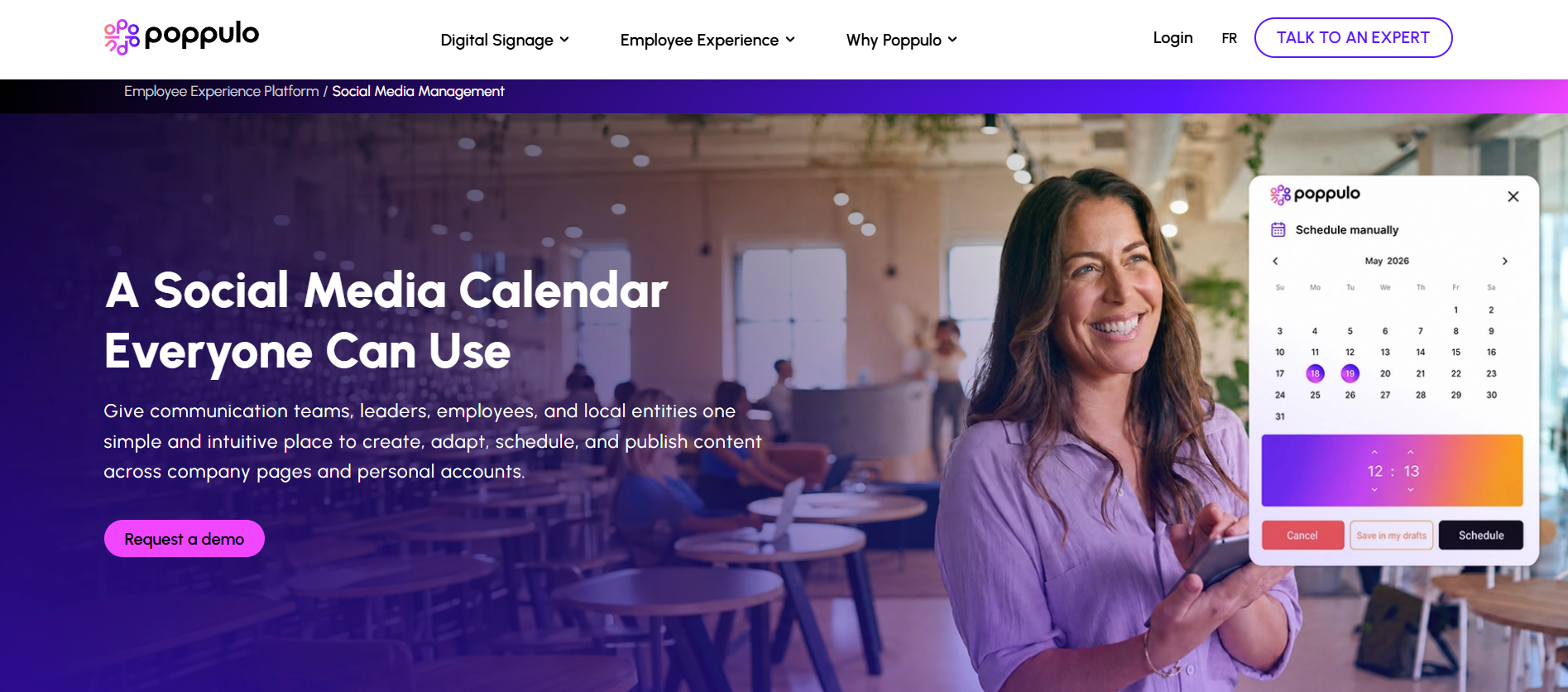
Sociabble is one of the clearest fits for organizations that want employee advocacy to extend beyond knowledge workers.
Its platform covers employee communications, employee advocacy, and engagement, while its published materials explicitly address employees who do not have corporate email accounts.
That combination matters because many organizations have two separate problems: getting approved content to employees and giving those employees a straightforward way to share it externally.
Employee advocacy capabilities
Sociabble’s employee advocacy capabilities include distributing content to employees and making it available for sharing through personal social networks.
Marketing, communications, and employer branding teams can use it to:
- Curate and distribute company-approved social content.
- Give employees suggested messages and content they can adapt.
- Share formats such as images, videos, and other social media assets.
- Organize participation through targeted groups and campaigns.
- Track advocacy activity and encourage participation through gamification.
A useful feature is its support for both structured company campaigns and content that employees can personalize. Organizations can maintain brand standards without requiring every participant to publish identical wording.
Frontline reach
Sociabble has a documented advantage for deskless access. Its materials describe mobile access for employees without corporate email accounts, alongside employee advocacy and content distribution capabilities.
That makes it a credible option for organizations trying to involve store teams, field workers, or other employees who are not routinely active in Microsoft Teams, Slack, or email.
It does not eliminate every operational challenge. Workers still need appropriate device access, account setup, permissions, and a reason to participate. A buying team should confirm that the no-email access path supports the exact advocacy workflows planned for its frontline pilot.
Pricing and limitations
Sociabble provides custom pricing based on organizational requirements and the capabilities purchased. Public information does not establish one universal employee advocacy subscription price.
Its breadth can also make the evaluation more involved. A business buying advocacy only should check whether a narrower product offers everything it needs without additional employee communications modules.
Best fit: Midmarket and enterprise organizations that want external employee advocacy, employer branding, and workforce-wide content access in a connected environment.
What to verify in a demo: Invite a test user without corporate email, send that person a campaign, and confirm the steps required to open, personalize, share, and report on an external post.
3. EveryoneSocial — Best for Enterprise Employee Advocacy and Content Distribution
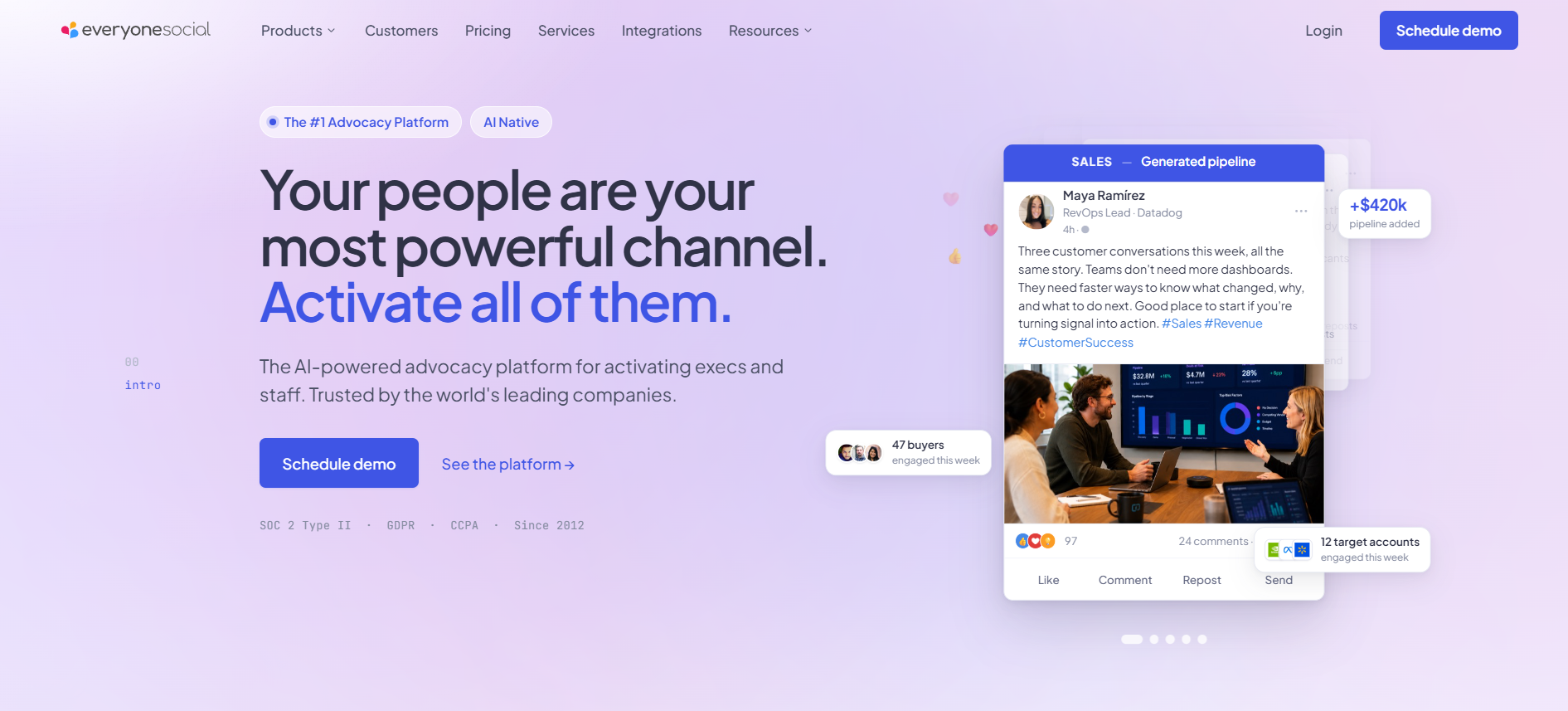
EveryoneSocial focuses on helping employees discover, create, and distribute content through their own professional and personal networks.
Its approach is particularly relevant to organizations that want advocacy to extend beyond the marketing team into sales, recruiting, executives, and other employee groups.
The platform supports a mix of centrally curated company content and material contributed by employees. That balance can help avoid a common program problem: an advocacy feed that consists entirely of corporate press releases.
Features that matter
EveryoneSocial offers content management, employee sharing tools, and reporting capabilities designed around advocacy programs.
Its documented capabilities include:
- Content feeds that employees can browse and share.
- Mobile access through employee-facing applications.
- Content contribution and employee-generated material.
- Administrative controls for managing content and participation.
- Analytics for monitoring advocacy activity and outcomes.
For larger organizations, the ability to support different employee groups is useful. A recruiter sharing hiring content has different needs from a salesperson discussing industry developments or an executive posting a company perspective.
EveryoneSocial can support those distinct uses without requiring the same content mix for everyone.
Where it fits frontline teams
EveryoneSocial documents mobile access and positions its platform for reaching employees beyond the office. That is a positive starting point.
The qualification is onboarding. Public documentation reviewed did not establish a complete no-corporate-email participation flow for deskless workers, including identity verification, account activation, and external sharing permissions.
Its frontline reach is therefore rated Limited, pending a working demonstration of those steps.
For employers with thousands of shift-based workers, this is more than a technical detail. A small problem in the invitation or login process can prevent an entire group from participating.
Pricing and buying considerations
EveryoneSocial’s pricing information describes a model based on registered users, with custom proposals for organizations of different sizes. A single published per-user price was not available.
Before requesting a quote, decide who actually needs an advocacy account. Paying for every employee when only a smaller group has opted into advocacy can distort the economics of a program.
Best fit: Enterprises building a coordinated employee advocacy program across marketing, sales, recruiting, and leadership.
Watch for: The difference between registered users, active advocates, and the total eligible workforce. Those figures are not interchangeable when estimating cost or performance.
4. DSMN8 — Best for Structured Advocacy Campaigns and Content Amplification
DSMN8 is a specialist employee advocacy platform built around making company content available for employees to share through their own networks.
It suits organizations that already have a steady content operation and want a defined process for distributing approved material, involving employees, and measuring the resulting activity.
Rather than asking everyone to invent a post from scratch, marketing teams can provide content employees can access and adapt.
Where DSMN8 stands out
The platform includes:
- Content libraries: Centralize approved material employees can use for advocacy.
- Campaign distribution: Make content available to relevant employee groups.
- Employee sharing: Support sharing through personal social channels.
- Mobile participation: Give employees access to advocacy content through mobile devices.
- Reporting: Measure activity and track campaign performance.
DSMN8 also supports different ways to distribute or share content, including links and messaging-related workflows. That flexibility can be useful when employees communicate through different networks.
For example, an employer branding team could prepare a hiring campaign with role-specific content for recruiters, hiring managers, and participating employees. Each group could receive material appropriate to its audience rather than an identical company-wide message.
Frontline participation
DSMN8 documents mobile access and support for sharing content through different social channels. Those features make participation possible beyond desktop users.
However, access through a mobile device does not establish that frontline employees can sign up without corporate email or use all relevant features without employer-managed accounts.
Frontline reach is rated Limited until those onboarding details are confirmed.
A meaningful pilot should include employees from actual shift-based roles, not just office volunteers testing the mobile application.
Pricing
DSMN8’s pricing information describes quote-based arrangements, with costs influenced by the platform configuration and organizational requirements. There is no single publicly established price applicable to all employers.
Choose DSMN8 if: You have a marketing or employer branding team prepared to maintain a content pipeline and want a focused system for distributing and tracking advocacy campaigns.
Potential limitation: Dedicated social advocacy features do not automatically solve the internal communications problems that may prevent frontline employees from hearing about those campaigns in the first place.
5. GaggleAMP — Best for Teams That Want Specific Social Engagement Actions
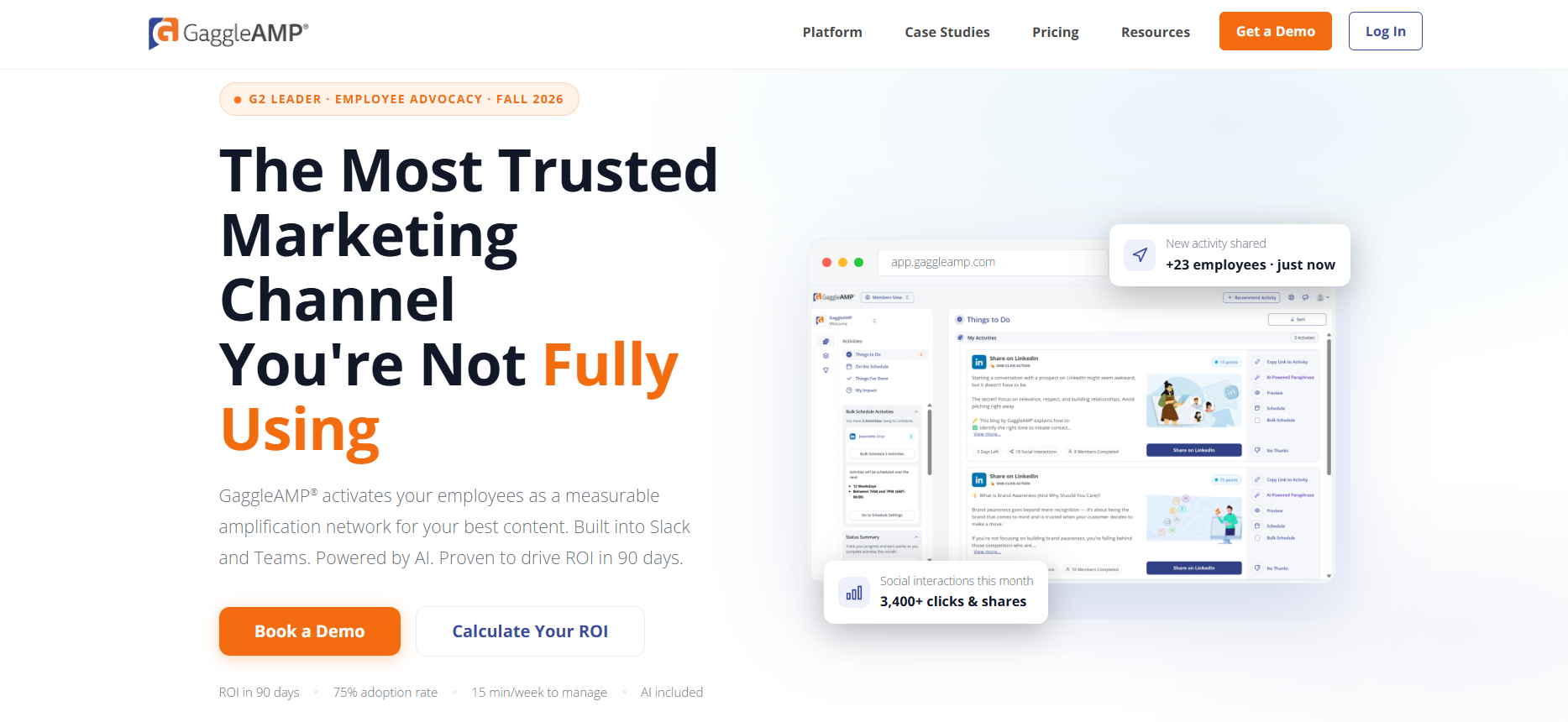
GaggleAMP approaches employee advocacy through organized activities. Instead of relying only on a content feed and hoping employees share what they find, program managers can give participants defined social engagement opportunities.
Those activities may include sharing a post, commenting on content, or taking another appropriate action on a supported network.
This makes GaggleAMP particularly relevant to marketing teams that want a repeatable participation process and need to understand which activities employees complete.
What makes its approach different?
GaggleAMP’s core strengths include:
- Assigned advocacy activities and engagement opportunities.
- Content suggestions and messaging employees can use.
- Integration options involving workplace collaboration tools.
- Participation measurement and reporting.
- Employee engagement features intended to encourage continued activity.
The structured activity model can be effective for campaigns where the objective is specific, such as expanding visibility for an industry report or encouraging employees to share a recruiting announcement.
But structure can become counterproductive if every activity feels like an assignment. Employees generally need a genuine choice about whether a post fits their personal audience and whether they want to put their name behind it.
That is especially important when an employer measures participation.
Frontline reach and access
GaggleAMP offers mobile participation, including mobile applications, so advocacy is not confined to desktop browsing.
Its documented workflows also involve channels such as Slack and Microsoft Teams, which may be familiar to office-based employees but less accessible to some frontline groups.
Public materials reviewed did not establish a complete, no-corporate-email onboarding model for all deskless participants. That leaves frontline reach at Limited rather than a confirmed organization-wide fit.
Pricing and limitations
GaggleAMP describes pricing based on company size, with custom proposals. Its published pricing approach includes unlimited members within the applicable plan structure, making it important to ask exactly how the company-size band is determined.
That is a different commercial model from platforms priced primarily by registered advocates.
Best fit: Marketing teams running recurring social campaigns that benefit from structured activities and clear participation reporting.
Where it may fall short: Programs whose main challenge is access to frontline employees, rather than motivating an already-connected group of advocates.
6. Oktopost — Best for B2B Social Media Teams That Need Advocacy and Governance
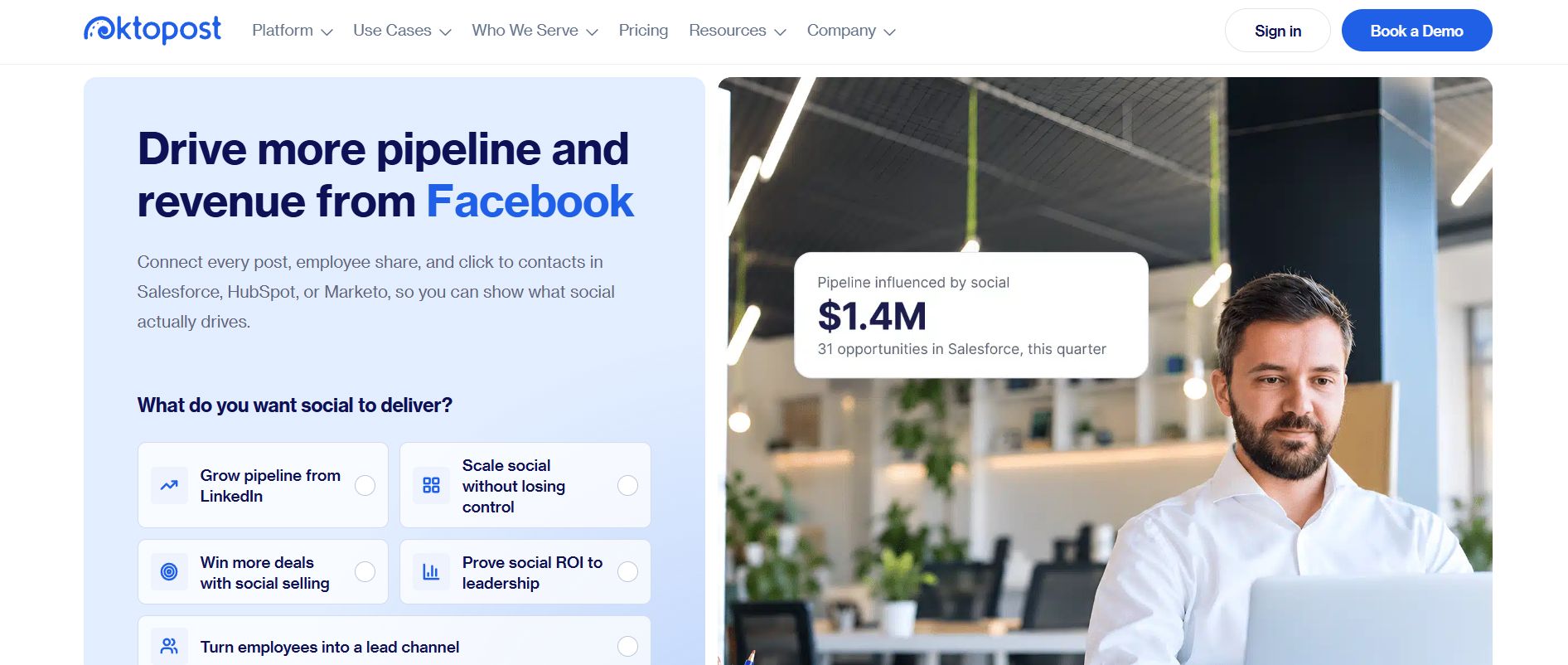
Oktopost combines employee advocacy with a broader B2B social media management platform. Its appeal is strongest for organizations where employee sharing needs to work alongside corporate social publishing, campaign management, and reporting.
A B2B software company, professional services firm, or other relationship-driven business may find that integration useful. Employee participation can be treated as part of a coordinated social strategy rather than an isolated employer branding project.
Core advocacy capabilities
Oktopost documents features including:
- Curated advocacy content for employee sharing.
- Campaign management and employee grouping.
- Employee-facing access to approved posts.
- Permissions and controls for administering the program.
- Reporting on employee advocacy activity.
- Mobile participation and employee invitations.
Its wider social media environment is a differentiator. Marketing teams can coordinate employee advocacy with other social activity rather than managing separate disconnected systems.
For companies with strict brand, legal, or regulatory review requirements, governance and approval capabilities deserve close attention during evaluation.
What about deskless workers?
Oktopost documents mobile advocacy and invitation-based participation. That means employees do not necessarily need to sit at a work computer to access relevant activity.
However, its public materials do not conclusively establish a complete no-email activation path for workers without corporate identities. Its frontline reach is therefore Limited for the purpose of this comparison.
There is also a strategic consideration. Oktopost’s B2B orientation may be a strong match for professionals who use LinkedIn regularly, but less compelling for an employer whose frontline staff prefer other personal social networks or rarely share professional content.
That does not make frontline advocacy impossible. It means the buyer should test employee behavior and platform compatibility before committing to a broad rollout.
Pricing and best fit
Oktopost offers custom pricing rather than one public employee advocacy price. Buyers should confirm what is included in the advocacy package and how it relates to the broader social media platform.
Choose Oktopost if: B2B social media management, employee advocacy, governance, and campaign reporting need to work together.
Consider alternatives if: Your main requirement is helping thousands of employees without email access discover company news and contribute workplace stories.
7. Parliament by Hootsuite — Best for Organizations Already Using Hootsuite
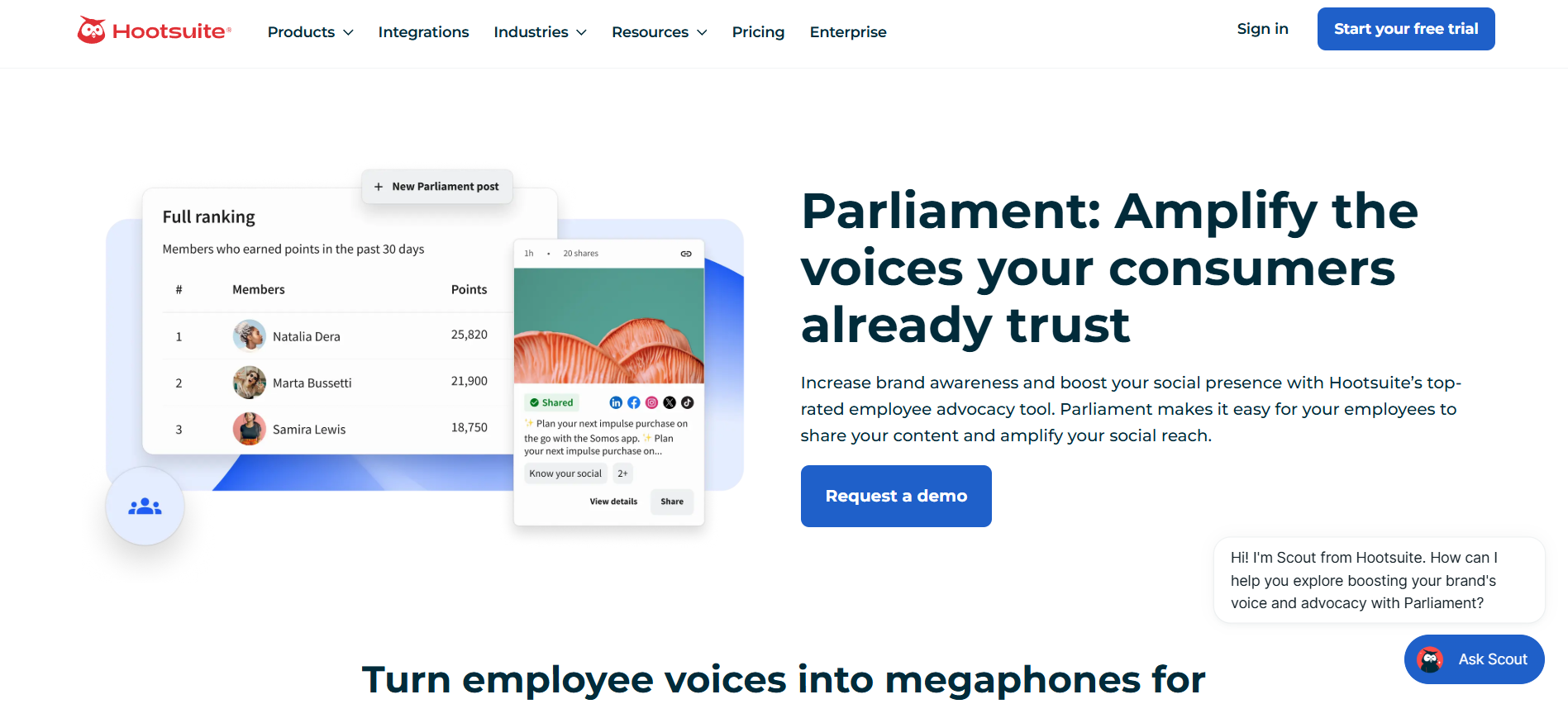
If you remember Hootsuite’s employee advocacy product as Amplify, the current name to look for is Parliament.
Hootsuite has repositioned its employee advocacy offering under Parliament within its broader social media platform. This makes current branding important when comparing older reviews, implementation materials, and pricing discussions.
Organizations already managing their social presence through Hootsuite may find value in keeping employee advocacy connected to the tools their marketing teams already know.
How the platform supports advocacy
Hootsuite Parliament provides a way for organizations to make approved content available to employees for sharing.
Relevant capabilities include:
- Company-approved content for employee advocacy.
- Employee sharing workflows connected to personal social networks.
- Administrative controls and participation management.
- Recognition or gamification features designed to encourage activity.
- Reporting on advocacy engagement and performance.
For a company with an existing social media operation, the practical advantage is coordination. A social media manager can plan corporate campaigns while also making selected content available for employee amplification.
Does Parliament work for frontline employees?
Hootsuite documents employee sharing and access through mobile-oriented workflows. That means advocacy participation is not inherently restricted to an office desktop.
Still, the public documentation reviewed did not demonstrate a complete no-corporate-email onboarding process for frontline employees.
Its frontline reach is Limited until an organization confirms the invitation, login, publishing, and reporting experience for staff without company email accounts.
Existing Hootsuite customers should also verify whether their current subscription includes Parliament. The presence of other Hootsuite products does not establish entitlement to the employee advocacy offering.
Pricing
Parliament-specific pricing is available through a custom enterprise sales process. Published pricing for other Hootsuite subscriptions should not be treated as the price of Parliament.
Best fit: Enterprises with an established Hootsuite environment that want to add employee advocacy without introducing an entirely separate social media management ecosystem.
Potential limitation: Organizations looking primarily for frontline internal communications may still require another platform to make information accessible to all employees.
What Happened to Bambu, PostBeyond, and Dynamic Signal?
Older employee advocacy comparisons still contain names that no longer describe the market accurately.
Bambu by Sprout Social was renamed Employee Advocacy by Sprout Social. Buyers comparing current software should evaluate it under that newer product name rather than assume Bambu is a separately marketed product.
PostBeyond was acquired by Influitive. The PostBeyond name has remained associated with Influitive’s employee advocacy offering, so buyers should check the current product and commercial arrangements directly.
Dynamic Signal became part of Firstup following the combination of Dynamic Signal and SocialChorus. Firstup’s focus is broader employee experience and communications, so it should not automatically be treated as equivalent to the original Dynamic Signal advocacy product.
And as noted above, Hootsuite Amplify is now Parliament.
These changes are a good reason to verify vendor names, feature availability, and contract terms using current product information rather than relying on older comparison articles.
How to Choose the Right Employee Advocacy Platform
The most useful buying question is not simply which platform has the most features. It is which part of the advocacy process is currently failing.
A company that cannot get announcements to field employees has a different problem from one that already has 500 active advocates but cannot measure the results of their social posts.
If you need to include frontline and deskless employees
Start with Sociabble if external social sharing and documented access for workers without corporate email are both required.
Consider HubEngage when the immediate priority is distributing information, collecting employee stories, and building participation inside a frontline workforce. Confirm external advocacy features separately, or pair internal communications with a dedicated sharing platform.
In either case, test the process with actual frontline employees. The demo should cover how they receive an invitation, log in, find content, understand what is optional, and complete a share.
If you primarily want LinkedIn advocacy from office-based teams
EveryoneSocial, DSMN8, and Oktopost are strong candidates for closer evaluation.
EveryoneSocial offers a broad enterprise advocacy environment. DSMN8 is relevant for structured content amplification programs. Oktopost is worth considering when advocacy needs to sit alongside B2B social publishing and reporting.
Selection should depend on content workflows, integrations, measurement requirements, and the employees expected to participate.
If you need structured engagement campaigns
Look at GaggleAMP when assigning specific engagement opportunities is central to your program.
Also consider Parliament if your organization already uses Hootsuite and wants to coordinate employee advocacy with its existing social media processes.
Neither decision should be based on feature lists alone. Ask who will run the campaigns, approve content, support employees, and analyze the results.
If your budget is limited
Begin with a small, voluntary program before purchasing a large enterprise subscription.
Choose one audience, one content category, and a realistic participation goal. Provide approved links or suggested messages, let employees adapt the wording, and measure outcomes over a defined period.
This pilot will tell you whether the immediate problem is content quality, employee motivation, distribution, or reporting.
The software should solve a demonstrated problem, not create an obligation to recruit advocates simply because licenses have been purchased.
Five Capabilities Worth Testing Before You Buy
Product demonstrations tend to focus on the easiest employee journey: a connected user with a corporate email address and an active professional social account.
A realistic evaluation should go further.
1. Employee access and identity
Ask whether employees can join using a personal email address, phone-based invitation, employee ID, single sign-on, or another supported identity method. Verify the actual process rather than accepting a general claim of mobile access.
2. Content relevance
Check whether different employee groups can receive appropriate content. A warehouse associate should not have to search through sales enablement posts to find a company story worth sharing.
3. Employee control
Advocacy should give people the option to edit, decline, or ignore suggested posts. Employees should not be required to hand over personal social account credentials to an employer or agency.
4. Reporting that goes beyond shares
Ask whether the platform measures clicks, site visits, tracked applications, conversions, or other outcomes relevant to your program. Confirm which metrics the software can actually attribute and which require separate analytics systems.
5. Compliance and employee rights
The FTC’s Endorsement Guides explain why employees who promote their employer’s products may need to disclose their employment relationship clearly.
For US organizations, employee advocacy policies should also be considered alongside the National Labor Relations Board’s guidance on employee social media rights. An advocacy program should not become a way to pressure workers into making promotional claims or restrict legally protected discussion of workplace conditions.
These considerations should be part of program design, not an afterthought once employees start posting.
Building an Employee Advocacy Program That People Actually Use
The main obstacle in many advocacy programs is not a lack of sharing buttons. It is a lack of content employees genuinely want to associate with their names.
During a launch, participation can rise because employees are curious, managers are promoting the initiative, or a new campaign has attracted attention. That early activity does not establish a lasting habit.
Sustained participation is more likely when employees regularly see material that is relevant to their work and their personal networks.
For a recruiting campaign, that might mean a short video about a real workplace role. For an industry campaign, it might be a useful article that employees can discuss in their own words. For a frontline employer branding initiative, it might be a voluntarily contributed photo or story from a store, site, or team.
The distinction between employee advocacy and employee recognition is useful here. Recognition can help an organization celebrate employee contributions internally, but employees should decide whether they want those stories shared publicly. The same principle applies when choosing employee recognition software to complement a communications program.
Organizations should establish clear consent practices for employee photos, videos, testimonials, and personal stories before using them in public advocacy.
And they should respect the fact that not everyone wants to be an advocate. A program with a smaller group of genuinely interested employees may be more credible and more sustainable than one built around compulsory participation.
Frequently Asked Questions
Does employee advocacy software actually work?
It can, but the software does not create employee credibility or enthusiasm on its own.
An employee advocacy platform makes it easier to distribute approved content, organize participation, and measure activity. The effectiveness of the program still depends on content quality, relevance, employee choice, and the audience each person reaches.
Employee advocacy is particularly useful when employees have authentic experience or expertise to add. Simply asking people to repeat company marketing messages may produce shares without meaningful engagement.
The practical test is whether advocacy helps achieve a defined business objective, such as attracting qualified job applicants, driving useful website visits, or increasing participation in relevant industry conversations.
How do you measure employee advocacy ROI?
Start by separating participation, distribution, and business outcomes.
Participation measures might include active advocates and the percentage of enrolled employees who share content. Distribution measures include shares, clicks, and visits resulting from those posts. Business outcomes depend on the campaign: recruiting inquiries, completed applications, qualified leads, or attributable conversions.
Where the underlying data is available, a basic return-on-investment calculation is:
Employee advocacy ROI = (Attributable value − Total program cost) ÷ Total program cost × 100
Total costs should include software, administration, training, content production, and other meaningful expenses. Attributable value should reflect evidence, not an assumption that every click or lead would otherwise have been lost.
For a broader approach to measuring communications investments, see our internal communications ROI guide.
How can frontline employees participate if they don’t use LinkedIn?
They do not need to become active LinkedIn users to participate in employee advocacy.
Start by identifying the platforms employees already use voluntarily and the kinds of content they feel comfortable sharing. Depending on the workplace and campaign, participation might involve Facebook, Instagram, personal messaging networks, employee referrals, or contributions to company-owned storytelling channels.
The Pew Research Center’s 2025 social media research illustrates why a social strategy aimed at US audiences should not treat every network as interchangeable.
For frontline employees, reducing access barriers matters just as much as choosing the channel. The platform should make participation understandable on a phone, support the appropriate identity method, and avoid assuming employees check corporate email outside a shift.
Participation should remain voluntary, particularly when it involves personal accounts.
What is the difference between employee advocacy and internal communications software?
Employee advocacy software is primarily concerned with helping employees share selected content outside the organization, usually through their personal social networks. It may provide suggested posts, approval processes, scheduling, campaign tracking, and social analytics.
Internal communications software is primarily concerned with getting information to employees and supporting communication inside the organization. Common features include employee feeds, announcements, mobile notifications, messaging, intranets, and digital signage.
The categories overlap, but they solve different problems.
An employer may need an internal communications platform to reach workers without corporate email, a dedicated advocacy tool to manage external social sharing, or one system that demonstrably supports both.
Final Verdict
The right employee advocacy platform depends on who you want to reach and what you want them to do. Sociabble stands out for documented deskless access combined with external advocacy. EveryoneSocial, DSMN8, GaggleAMP, Oktopost, and Parliament offer different strengths for structured social-sharing programs. HubEngage is most relevant when frontline communications and employee participation come first, with external advocacy capabilities requiring separate verification.
Before signing a contract, test the entire experience with employees who represent your actual workforce—not only the people who will administer the platform.