A strong internal communications newsletter gives employees timely, useful updates they can act on, not just company news. In 2026, the best employee newsletter programs are segmented by audience, built around real work priorities, accessible to frontline teams, and governed carefully when AI helps draft content. If employees cannot quickly see what changed, why it matters, and what to do next, the newsletter is failing.
- Start with employee needs, not company announcements. The best internal newsletter content answers, “What changed, why does it matter, and what should I do?”
- Segment by role, location, and work context. One company newsletter rarely serves headquarters staff, managers, and frontline teams equally well.
- Use newsletters as part of a channel system. Email, mobile, intranet, manager cascades, and shift briefings should reinforce each other.
- Design for action and skim reading. Clear subject lines, short sections, mobile-first formatting, and one primary action per item improve usefulness.
- Measure behavior, not just opens. Track click paths, manager follow-through, frontline reach, employee questions, and whether people understood the message.
What is an internal communications newsletter?
An internal communications newsletter is a recurring employee communication that packages important updates, priorities, recognition, policy changes, and practical information into one predictable format. It can be delivered by email, mobile app, intranet, messaging platform, printed handout, or a combination of channels.
An effective employee communications newsletter is not just a digest of headlines. It is a decision tool. It helps employees understand what matters now, what has changed, and where to go for details.
That matters more in 2026 because engagement remains under pressure. Gallup reported global employee engagement at 20% in 2025, the lowest level since 2020, and found persistent issues with clear, honest, and consistent communication from leaders (Gallup State of the Global Workplace). In the U.S., Gallup reported engagement at 31% in the first half of 2026, unchanged from 2025, which suggests many organizations still have a communication and management execution problem, not just a morale problem (Gallup 2026 update).
For many companies, the newsletter remains a core channel. The 2025 Global State of Internal Communications report cited email newsletters as the most-used internal communications channel among respondents (ContactMonkey summary). But reach does not equal impact. A newsletter employees ignore, cannot access, or cannot apply to their work is just another message.
Why does an employee newsletter still matter in 2026?
Yes, the employee newsletter still matters, but only when it helps employees navigate change faster and with less confusion. In 2026, newsletters matter because organizations need one dependable format that can connect leadership priorities, frontline operations, manager actions, and employee questions.
A modern company newsletter does four jobs well:
- Explains priorities in plain language.
- Translates change into role-specific implications.
- Routes employees to the right next step, policy, tool, manager, or support channel.
- Creates rhythm so employees know when and where updates appear.
This need is sharper because work is changing quickly. Microsoft’s 2025 Work Trend Index described the rise of “Frontier Firms” and a widening divide between organizations moving quickly with AI and those still struggling to translate technology into daily work (Microsoft Work Trend Index, executive summary PDF). Employees need communications that explain not only strategic changes, but what those changes mean for meetings, workflows, tools, judgment, and support.
For frontline audiences, the gap is even larger. Research summaries in 2025 reported that many communicators still struggle to reach non-desk workers effectively, and that satisfaction with internal communication among non-desk employees remains low (Modus 2025 report, Staffbase study coverage). That makes the frontline employee newsletter a distribution and design challenge, not just a writing challenge.
What should an internal newsletter include?
The best internal newsletter content includes only items that help employees understand priorities, take action, or feel better connected to the work. If a section does neither, cut it.
A practical internal newsletter usually includes these content blocks:
| Content block | What it does | Best use | Common mistake |
|---|---|---|---|
| Top priorities | Clarifies what matters now | Weekly or biweekly updates | Too many priorities at once |
| Operational changes | Explains process, policy, or system updates | Compliance, HR, IT, operations | Linking to long documents with no summary |
| Manager toolkit | Helps supervisors brief teams consistently | Change rollouts, policy changes | Sending it only to managers, not employees |
| Recognition and people stories | Reinforces values and peer visibility | Culture and morale | Letting recognition crowd out useful information |
| Metrics or progress snapshot | Shows movement on goals | Quarterly strategy updates | Reporting numbers with no context |
| FAQ or myth vs fact | Reduces confusion | Reorganizations, AI changes, benefits | Avoiding the hard questions |
| Action links | Sends people to the next step | Training, benefits, tools, surveys | Too many competing calls to action |
Use this simple test before publishing any item:
- What changed?
- Why should this audience care?
- What should they do next, if anything?
- Where can they get help?
If the item does not answer those four questions, it is not ready.
How do you structure an internal communications newsletter employees will read?
2023 Psychological Safety Inventory validation study
Employees read more when the internal communications newsletter is predictable, easy to scan, and clearly relevant to their role. Structure matters as much as content.
Use this recommended format:
- Subject line or headline with a clear reason to open
- One-sentence lead that explains the most important update
- Three to five short sections with descriptive labels
- One primary action per section
- A closing route to questions, manager guidance, or deeper resources
Recommended newsletter layout
Header
- Newsletter name
- Date
- Audience label if segmented
Top section: What matters this week
- 2 to 3 high-priority items
- 1 sentence each, plus action link
Middle section: What changed in the business
- Policy, process, system, customer, safety, scheduling, or people updates
Middle section: Manager talking points
- What managers should explain in team huddles or 1:1s
Lower section: Recognition or employee story
- Keep it short and relevant
Footer
- Help channel
- Archive link
- Translation or accessibility options
A good internal newsletter design supports skim reading. Use short paragraphs, descriptive subheads, generous spacing, and buttons or links that make next steps obvious. Most employees do not read internal newsletters top to bottom. They scan for relevance.
What are internal newsletter best practices for 2026?
The most important internal newsletter best practices in 2026 are segmentation, mobile accessibility, manager reinforcement, frontline reach, and careful AI governance.
1. Segment by audience and context
A single all-staff company newsletter often becomes too generic. Segment by:
- Function
- Location
- Business unit
- Manager level
- Frontline vs office-based work
- Language
- New hires vs tenured employees
Segmentation improves relevance and reduces clutter. It also helps connect to search interest around employee engagement for frontline teams and employee engagement platform for frontline workers, because the communication needs of deskless employees differ materially from office teams.
2. Design for mobile first, not desktop first
If employees open on phones, shift kiosks, or shared devices, mobile design is mandatory. Keep headlines short, links large enough to tap, and paragraphs compact. For deskless populations, email may need support from QR posters, text alerts, app notifications, printed shift handouts, or manager briefings.
3. Pair the newsletter with manager communication
Many employees trust their direct manager more than an abstract corporate message. Use the newsletter to equip managers with:
- Talking points
- FAQ language
- Escalation contacts
- Clarification on what is changing locally
This is especially important because Gallup’s 2025 findings show communication clarity remains a major weakness in many organizations (Gallup workplace findings).
4. Make AI useful, then keep humans accountable
AI can speed drafting, summarization, translation support, and audience adaptation. It should not be the final decision-maker for employee-facing communication. In 2025 and 2026 guidance, human review and named approval remain central controls for AI-generated content, especially for HR, policy, and legal-sensitive topics (Fisher Phillips PDF, FT Consulting Partners on AI governance in HR).
5. Build for trust, not just efficiency
Employees notice when a newsletter avoids uncomfortable issues. Address real questions directly. If there is uncertainty, say so. If the organization is testing an AI system, changing schedules, adjusting benefits, or updating reporting lines, explain what is known, what is not yet decided, and how employees can ask questions.
How should frontline and deskless teams use an employee newsletter?
A frontline employee newsletter should be short, accessible during work, relevant to local operations, and reinforced through supervisors and shift routines. It cannot depend on corporate email alone.
This is where many programs fail. Research in 2025 pointed to serious reach problems for frontline workers and low satisfaction with internal communication among non-desk employees (Modus report, GlobeNewswire coverage of Interact x Ragan research).
Frontline newsletter rules
- Lead with operational relevance. Start with safety, scheduling, customer changes, tools, staffing, or process updates.
- Use multiple access points. Mobile app, text, QR code, printed notice, supervisor huddle, and break-room screen can work together.
- Keep it local where possible. Site or shift-specific updates are often more useful than enterprise news.
- Use plain language and translations. Employees should not need head office vocabulary to understand the message.
- Close the loop. Include where to ask questions and when answers will be shared.
For broader context, use TurnOnWork resources on frontline employee engagement and workforce experience when designing a communication system that reaches deskless employees.
What are good internal communications newsletter examples?
Good internal communications newsletter examples show clear purpose, audience fit, and next steps. The exact design will vary, but the patterns are consistent.
Example 1: Weekly all-staff company newsletter
Best for: Mid-sized organizations that need a predictable weekly rhythm
Sections:
- This week’s priorities
- Business update
- People and recognition
- Manager talking points
- Key dates
Why it works:
- Predictable format
- Limits the issue to 4 or 5 essential items
- Helps employees scan quickly
Example 2: Frontline operations newsletter
Best for: Retail, manufacturing, logistics, healthcare, hospitality, field services
Sections:
- Safety and service updates
- Scheduling or staffing changes
- Process reminders
- Site spotlight
- Quick Q&A
Why it works:
- Focuses on the workday
- Can be distributed through mobile, print, and huddles
- Fits employees who have limited desk time
Example 3: Manager cascade newsletter
Best for: Organizations that rely on managers to explain change locally
Sections:
- What to say this week
- Questions to expect
- What managers should escalate
- Employee-facing resources
Why it works:
- Reduces mixed messages
- Helps managers turn central communication into local conversation
- Improves consistency without scripting every word
Example 4: Change or transformation newsletter
Best for: Reorganizations, AI rollouts, new systems, mergers, policy changes
Sections:
- What changed
- What it means by audience
- Timeline
- FAQ
- Ask a question
Why it works:
- Reduces rumor spread
- Makes uncertainty manageable
- Creates a visible record of updates over time
What are useful internal newsletter ideas employees actually value?
The best internal newsletter ideas and employee newsletter ideas are practical, timely, and tied to work. Employees rarely need more generic cheerleading. They usually need clarity.
Try these recurring ideas:
- What changed this week
- Top 3 priorities by team or function
- Customer insight of the month
- Manager question of the week
- How another team solved a problem
- What we heard from employees, and what changed
- AI tool update, with human guidance on use
- Safety or compliance reminder with one real scenario
- New joiner tips or process shortcuts
- Frontline spotlight from a site or shift
These ideas work because they connect to daily work. That also makes them useful for broader interest around trends in employee engagement, current trends in employee engagement, and employee experience trends 2026. The trend is not toward more content. It is toward clearer, more relevant, more actionable communication.
What is the TurnOnWork newsletter framework?
Use the TurnOnWork SIGNAL framework to decide whether a newsletter issue is worth sending. This is a TurnOnWork editorial framework, not an industry standard.
SIGNAL stands for:
- S – Situation: What has changed in the business, workforce, customer environment, or operating model?
- I – Impact: Who is affected, and how does this show up in daily work?
- G – Guidance: What should employees or managers do now?
- N – Next step: Where should the audience go for help, detail, or action?
- A – Access: Can frontline, multilingual, and deskless workers realistically receive and use this message?
- L – Loop: How will you know whether people understood it, and how will questions flow back?
How to use the SIGNAL framework
Before publishing, review each article or section against the framework.
| SIGNAL question | If yes | If no |
|---|---|---|
| Is there a real situation employees need to know about? | Keep it | Cut it |
| Does the audience impact differ by role or location? | Segment it | Keep one version |
| Is there clear guidance or a next step? | Publish it | Rewrite it |
| Can frontline employees access it? | Distribute broadly | Add other channels |
| Is there a way to close the loop? | Track response | Add manager and feedback routes |
This helps prevent the common problem of sending polished but low-value internal newsletters that say a lot without helping employees do anything differently.
How often should you send an internal newsletter?
Most organizations should send an internal communications newsletter on a weekly or biweekly cadence, then add targeted sends for urgent changes. The right schedule depends on operating tempo, not habit.
Use this decision model:
| Cadence | Best for | Risk |
|---|---|---|
| Weekly | Fast-moving organizations, frontline operations, active change periods | Can become noisy if content is weak |
| Biweekly | Stable operating rhythm, moderate change volume | Important updates may bunch together |
| Monthly | Executive summary, culture, broad enterprise recap | Often too slow for action-critical updates |
| Trigger-based extra sends | Policy changes, incidents, urgent operations, benefits deadlines | Can confuse employees if not clearly labeled |
A common pattern is:
employee survey analysis guide
- Weekly or biweekly core newsletter
- Manager toolkit aligned to the same rhythm
- Urgent operational alerts outside the newsletter
- Monthly recap for leadership context and recognition
What should internal newsletter design look like?
Good internal newsletter design is clean, scannable, mobile-friendly, and accessible. It supports comprehension more than branding.
Design checklist
- Use a clear headline hierarchy
- Keep body copy short
- Put the most important item first
- Use one primary button or link per item
- Avoid crowded banners and decorative filler
- Make key dates easy to find
- Use alt text for images where possible
- Ensure color contrast supports readability
- Test on mobile devices and shared workplace screens
- Offer translated or simplified versions when needed
Design mistakes to avoid
- Huge hero images that push content below the fold
- Long intros before the point
- Eight or ten stories in one issue
- Too many colors or visual styles
- Subject lines that hide the topic
- Important policy changes buried under recognition content
If your newsletter needs a formal layout reference, build a simple employee newsletter template with reusable modules for top update, manager note, FAQ, recognition, and action link. Standardization helps speed production and improve readability.
What software is best for internal communications newsletters?
The best internal communications newsletter software depends on your workforce mix, segmentation needs, analytics, governance requirements, and frontline reach. No single tool is best for every company.
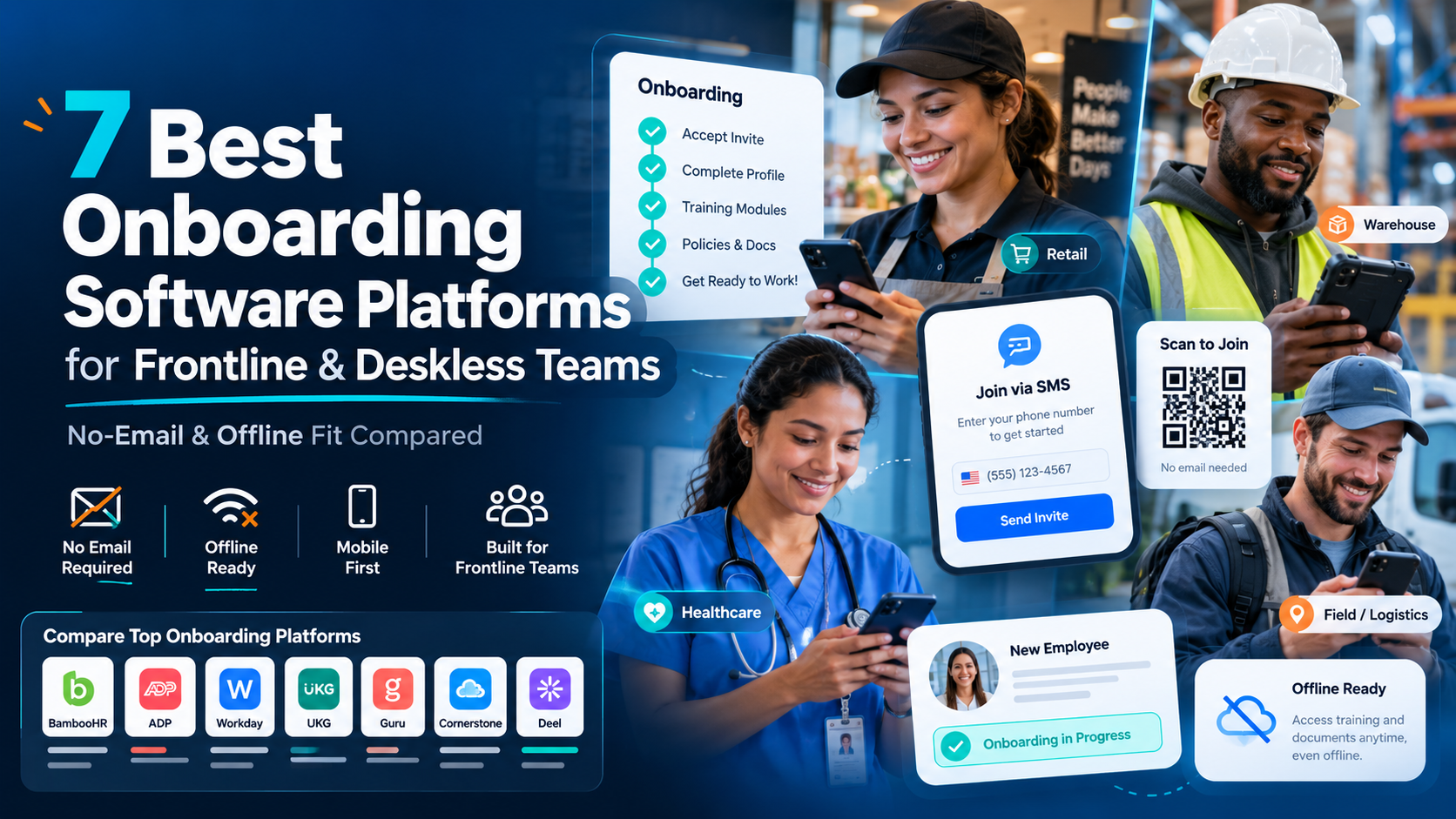
For example, HubEngage combines internal email with mobile, web, SMS, and other employee communication channels, giving teams another option when newsletters need to be part of a broader multi-channel communication system.
What to evaluate in newsletter software
| Capability | Why it matters | Questions to ask |
|---|---|---|
| Audience segmentation | Relevance and role-based targeting | Can we target by role, site, shift, manager, language? |
| Mobile access | Frontline reach | Can employees access it without corporate email? |
| Multi-channel distribution | Better reinforcement | Does it support email, app, SMS, intranet, kiosk, print export? |
| Analytics | Better decisions | Do we get clicks, device usage, audience reach, and content-level data? |
| Governance and approvals | Risk control | Can legal, HR, and operations review sensitive content? |
| Accessibility and translation | Inclusion | Does it support multiple languages and accessible formatting? |
| Integration | Workflow efficiency | Does it connect with HRIS, directory, collaboration, and intranet tools? |
| AI assistance with controls | Production speed | Can AI draft or summarize while preserving human approval? |
In 2026, software decisions should also consider AI governance. If the tool can generate copy, summarize updates, or personalize content, you still need named human review for employee-facing messages, especially when content affects policy, pay, benefits, performance, or legal obligations.
How do you measure whether an employee newsletter is working?
Measure an employee newsletter by whether employees received it, understood it, trusted it, and acted on it. Open rate alone is not enough.
Newsletter metrics that matter
| Metric | What it tells you | Limitation |
|---|---|---|
| Delivery rate | Whether the message reached inboxes or devices | Does not show comprehension |
| Open rate | Subject line and sending effectiveness | Increasingly unreliable in some environments |
| Click-through rate | Which topics attracted action | Does not show whether the message was understood |
| Section-level engagement | What content employees value | Needs the right platform setup |
| Frontline reach rate | Whether non-desk workers were reached | Often missing in email-only systems |
| Manager cascade completion | Whether leaders reinforced the message | Needs discipline to track |
| Employee questions | What remains unclear | Can rise for good or bad reasons |
| Follow-up behavior | Whether employees completed the intended action | Harder to measure, but most important |
Pair communication metrics with experience signals. For example:
- Did employees say they understood the change?
- Did managers report fewer repeated questions?
- Did adoption improve for a tool or process?
- Did frontline participation rise?
- Did rumor volume fall after the update?
TurnOnWork readers can also connect newsletter performance to a wider employee listening strategy and use a focused employee experience survey question library to test clarity, trust, and usefulness.
What mistakes should you avoid with company newsletters?
The biggest company newsletter mistakes are overloading employees, publishing generic content, ignoring frontline access, and confusing sending with communication.
Common mistakes and fixes
| Mistake | Why it hurts | Better approach |
|---|---|---|
| Treating the newsletter like a bulletin board | Employees stop paying attention | Curate only high-value items |
| Writing from the company’s view only | Relevance drops | Explain impact by audience |
| Sending one version to everyone | Important context gets lost | Segment by role and location |
| Burying hard news | Trust erodes | Address real questions directly |
| Relying on email for deskless workers | Reach fails | Add mobile, print, QR, and manager channels |
| Using AI with no human review | Risk increases | Require named reviewer and approver |
| Measuring opens only | Gives false confidence | Track understanding and action |
| Publishing without manager support | Employees get mixed signals | Add huddle or cascade guidance |
How do newsletters support employee engagement and employee experience trends in 2026?
A strong internal communications newsletter supports engagement when it reduces uncertainty, increases clarity, and helps employees do their work. It does not replace management quality, but it can improve the conditions around it.
This connects directly to major employee engagement trends and employee experience trends 2026:
- Employees want clearer priorities. Gallup’s findings continue to show gaps in employees knowing what is expected of them at work (Gallup).
- Frontline communication remains underbuilt. Many organizations still lack a reliable channel strategy for non-desk workers (Modus).
- AI is changing work faster than communication habits. Employees need practical guidance, not abstract innovation language (Microsoft Work Trend Index).
- Manager reinforcement matters. Clear communication travels through local leaders, not only central channels.
- Trust depends on candor. Employees notice when internal communication skips over difficult questions.
In other words, current trends in employee engagement point toward communication systems that are more targeted, more operational, and more transparent.
How should HR, internal comms, and managers divide responsibility?
The best internal newsletter programs have shared ownership. Internal communications may run the editorial process, but the content should be sourced and validated across functions.
Suggested ownership model
| Role | Main responsibility |
|---|---|
| Internal communications | Editorial calendar, writing, packaging, distribution |
| HR/people team | Policy, people updates, employee impact, manager enablement |
| Operations leaders | Frontline relevance, local change, channel access |
| Managers | Reinforcement, Q&A, local interpretation |
| IT / digital workplace | Platform administration, access, analytics, integrations |
| Legal / compliance | Review of sensitive or regulated content |
This shared model becomes even more important when AI tools are involved in drafting or summarizing employee-facing content.
What does a practical employee newsletter workflow look like?
A practical workflow is simple: gather, prioritize, segment, draft, review, distribute, reinforce, and measure.
healthcare validation evidence
8-step workflow
- Collect inputs from HR, operations, leadership, IT, and frontline teams.
- Prioritize ruthlessly using urgency, employee impact, and action needed.
- Segment audiences before drafting, not after.
- Draft for clarity in plain language.
- Review with the right owners, including human approval for AI-assisted copy.
- Distribute through matched channels for office and frontline audiences.
- Equip managers with talking points and FAQs.
- Measure response and questions, then refine the next issue.
For organizations that want tighter integration between communication and execution, TurnOnWork’s perspective is simple: a newsletter should not just announce work. It should help work happen.
FAQs about internal communications newsletters
What is the difference between an internal communications newsletter and an employee newsletter?
In practice, they usually refer to the same thing. Internal communications newsletter is the more formal organizational term. Employee newsletter is the plainer term most people recognize.
How long should an internal newsletter be?
Short enough to scan in a few minutes. For most organizations, 3 to 5 core items is enough. If you have more, segment the content or link to a fuller archive.
What is the best cadence for a company newsletter?
Weekly or biweekly works best for most active organizations. Monthly can work for recap-style communication, but is often too slow for operational updates.
Should frontline employees get the same newsletter as office employees?
Usually not in exactly the same form. A shared core message can work, but the channel, examples, and action guidance should reflect the realities of frontline work.
Can AI write an employee communications newsletter?
AI can help draft, summarize, translate, and adapt content. A human should still review and approve employee-facing communication, especially for sensitive or consequential topics.
What metrics matter most?
Track reach, clicks, frontline access, employee questions, manager reinforcement, and the behavior you wanted the message to drive. Open rate alone is not enough.
What are the best internal newsletter ideas for engagement?
The best ideas are usually practical: what changed, what employees need to do, what managers should say, how another team solved a problem, and what the organization heard from employees and changed in response.
Final takeaway
If you want an internal communications newsletter that works in 2026, make it useful before you make it polished. Segment it. Keep it short. Design it for mobile and frontline access. Use AI carefully, with human judgment. Measure whether employees understood and acted, not just whether they opened it.
The most effective employee newsletter is not a collection of updates. It is a reliable operating channel that helps people understand change, do their work, and trust the message.
If you are building or fixing your newsletter approach, start by auditing audiences, channels, manager reinforcement, and frontline access. Then define a repeatable editorial rhythm and connect it to broader TurnOnWork resources on internal communication strategy, frontline employee engagement, and employee listening strategy.