Global employee engagement fell to 20% in 2025, the lowest level since 2020, according to Gallup’s State of the Global Workplace. That single number explains why employee engagement trends in 2026 look less like program tweaks and more like a reset. Organizations have spent heavily on surveys, perks, and culture campaigns, yet the workforce has slid backward.
The listening and recognition trends below only stick if they run through tools people already open, which is why many teams pair the program with an employee surveys hub rather than a once-a-year census.
Beyond the Survey: The New Rules of Employee Engagement. The problem isn’t the objective. It’s the operating model. Annual surveys, generic communications, and office-centric engagement plans don’t match a workforce spread across functions, shifts, devices, and management layers.
The strongest teams are building a new engagement engine around AI, real-time listening, recognition, and operational execution. That shift matters because engagement now sits at the intersection of employee communications, HR technology, manager capability, and frontline workflow design. If those systems don’t work together, experience breaks down.
Key Takeaways
- AI is moving upstream: Organizations are using AI to detect sentiment patterns, personalize communication, and close recognition gaps earlier.
- Listening is becoming continuous: Embedded pulse feedback is replacing long gaps between surveys.
- Managers remain the key factor: Engagement strategy fails when managers lack coaching, context, or tools.
- Frontline design is the differentiator: Engagement rises when communication fits real shifts, devices, and work environments.
- ROI is now mandatory: Leaders expect engagement programs to connect to retention, absenteeism, productivity, and trust.
1. AI-Powered Sentiment Analysis
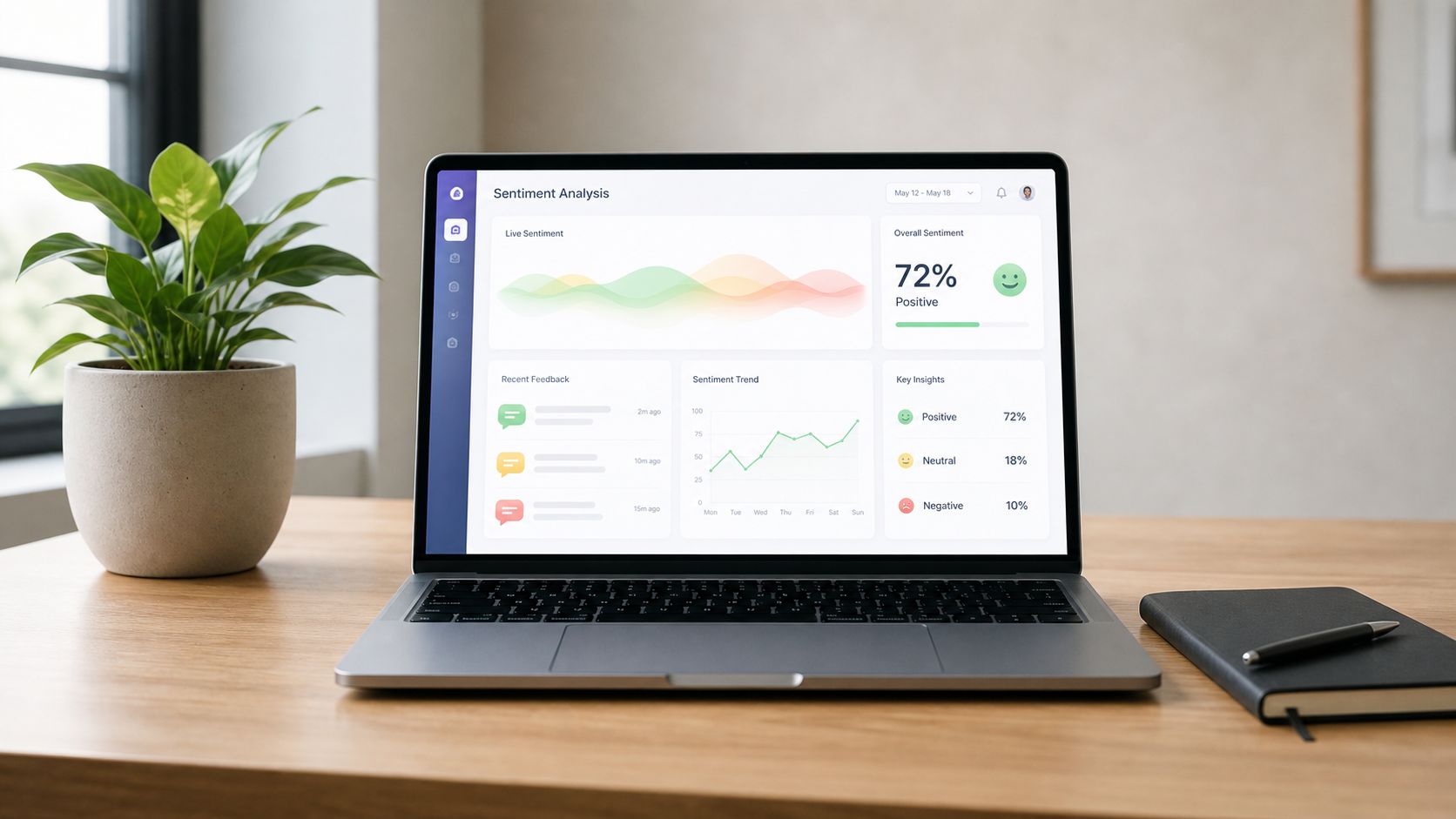
Gartner identifies employee listening as one of the top areas where HR leaders are applying AI, because the volume of open-text feedback now exceeds what HR teams can review manually at useful speed. That shift matters operationally. Engagement data is moving from periodic interpretation to ongoing signal detection across surveys, messaging channels, and employee comments.
The market is responding in kind. Gallup notes that AI is increasingly being built into employee experience and performance tools to support more personalized guidance and manager action. For HR leaders, the implication is clear. Sentiment analysis is no longer just a reporting feature inside survey software. It is becoming part of the action layer that shapes coaching, communication, and workflow decisions.
What’s changing
The biggest shift is not better text classification on its own. It is integration across the Turn On Work model. Sentiment signals become more useful when they sit alongside recognition trends, communication reach, scheduling friction, absenteeism patterns, and manager behavior. In that setup, AI helps teams detect where engagement is likely to break down inside daily operations, especially for frontline and distributed workforces where supervisors have less direct visibility.
That changes how organizations should design the workflow. A regional retailer might detect repeated frustration about shift fairness in employee comments, then connect that signal to schedule changes and site-level turnover. A healthcare provider might see recurring language about unclear handoffs, then adjust huddle scripts and manager follow-up. In both cases, AI speeds triage. Leaders still need a response system, which is why sentiment analysis works best when paired with a clear internal communications strategy for frontline and distributed teams.
One pattern is easy to miss. Sentiment data becomes more valuable when operations leaders use it, not just HR analysts.
Why it matters and what leaders should do
AI sentiment tools can improve detection speed, but they also create a governance problem. A model may flag negative language accurately and still miss the business cause behind it. Complaints about “communication” may reflect poor scheduling discipline, uneven manager briefings, or a recognition gap after a policy change. If leaders treat the label as the diagnosis, the intervention will be weak.
Start with a narrow use case tied to a measurable outcome. Workload concerns tied to absenteeism. Communication clarity tied to policy adoption. Scheduling fairness tied to turnover risk. Then assign owners across HR, operations, and line management before launch.
The practical goal is not more insight. It is faster intervention with traceable business impact.
2. Real-Time Continuous Listening
Annual engagement surveys still have a role, but they’re no longer enough. By the time a yearly survey closes, the organization has often changed several times. Reorgs, AI rollouts, staffing gaps, and policy shifts all affect employee sentiment faster than the old survey cycle can capture.
The newer model is lighter and more embedded. ContactMonkey describes continuous listening as embedding simple pulses such as star ratings, scaled remarks, or thumbs up and down into channels like internal emails, all-hands meetings, intranets, and SMS. That design matters because it meets employees where they already are.
What’s changing
Continuous listening isn’t just “more surveys.” It’s a different operating discipline. The most effective organizations connect listening to their internal communications strategy so every pulse has context, audience segmentation, and a follow-up plan.
That’s especially useful in distributed environments. A logistics business can attach a quick pulse to a shift update. A corporate function can gather thumbs-up or thumbs-down reactions after a town hall. A field operations team can ask one question after a policy change and compare responses by site.
Why it matters and what leaders should do
Continuous listening catches issues while leaders still have time to respond. It also reduces a common credibility problem. Employees stop trusting surveys when they only hear from the company once a year and see no visible action afterward.
Use a simple rhythm:
- Ask smaller questions: Focus on clarity, workload, scheduling, tools, or leadership trust rather than broad culture language every time.
- Segment responses: Break listening data by role, location, tenure, and shift so averages don’t hide operational pain points.
- Close the loop quickly: Tell employees what changed, what didn’t, and what leaders are still reviewing.
Continuous listening only works when communication and response move together.
3. Peer-to-Peer Recognition as Operational Currency

Recognition is becoming part of how work gets coordinated, measured, and reinforced. The shift matters because engagement does not rise from annual award programs alone. It rises when employees can see, in real time, which behaviors the organization notices and repeats.
That makes peer recognition more than a culture signal. In a distributed workforce, it also becomes operational data. A recognition pattern can show which teams collaborate well across shifts, which sites step in during demand spikes, and which frontline behaviors deserve wider adoption. Used well, recognition supports the Turn On Work model by connecting engagement signals to HR systems, workflow tools, and day-to-day execution.
What’s changing
The strongest programs share three design traits. They happen close to the work itself. They let peers participate at scale. They require a clear reason tied to a behavior, outcome, customer moment, or safety action.
That matters because manager-only recognition misses too much. In frontline and field environments, coworkers often see the effort that supervisors do not. A warehouse associate notices who prevented a picking error. A nurse sees who stabilized a difficult handoff. A field technician knows who shared the fix that avoided repeat service calls.
Recognition also works best when it lives inside the tools employees already use. That is especially important for organizations trying to improve workforce experience across frontline and distributed teams. If recognition sits outside scheduling, communication, or mobile workflow systems, participation usually skews toward desk-based employees with more time and better access.
Why it matters and what leaders should do
Peer-to-peer recognition acts as operational currency because it allocates visibility. It tells employees which contributions count, who gets noticed, and whether values show up in daily decisions. If recognition is uneven, engagement becomes uneven too.
HR leaders should treat recognition data with the same discipline they apply to listening data. Review participation by role, location, shift, tenure, and manager. Check whether praise clusters around headquarters, day shifts, or highly visible functions. If it does, the program is measuring access more than contribution.
A better approach is simple:
- Embed recognition in existing workflows: Use mobile, messaging, or frontline systems employees already open during the day.
- Require specificity: Ask employees to name the action, context, and business impact behind each recognition moment.
- Map recognition to operating priorities: Tag messages to customer service, safety, speed, quality, teamwork, or innovation so leaders can spot patterns.
- Audit for equity: Review who sends recognition, who receives it, and which teams are rarely visible.
The practical payoff is clearer than it first appears. Recognition can help HR identify informal influencers, surface repeatable high-performance behaviors, and give frontline employees a visible place in the engagement system, not just in the payroll system.
4. Manager Enablement Through Structured Coaching
Managers shape team engagement more than any other day-to-day factor. Gallup has long found that the manager explains 70% of the variance in team engagement, which makes manager capability a workforce operations issue, not just a leadership development topic.
That matters even more in distributed organizations, where the manager often becomes the main interpreter of policy changes, staffing pressure, schedule instability, and new AI-enabled workflows.
What’s changing
The operating model is shifting from manager training to manager systems. High-performing organizations are building repeatable coaching infrastructure: scheduled one-to-ones, short skill bursts, escalation paths for employee concerns, and prompts embedded in HR technology so coaching happens inside the flow of work.
Perceptyx adds an important context shift. Its 2025 analysis found that change management effectiveness and confidence in senior leadership became the top drivers of engagement, overtaking belonging and feeling valued. That raises the practical bar for managers. They need to explain change clearly, surface friction early, and convert broad communication into role-specific action.
For frontline environments, the design requirement is different. Coaching cannot depend on long desktop sessions or formal development programs that only corporate teams can access. It has to fit shift handoffs, mobile devices, and short manager interactions. That is why frontline employee engagement strategies increasingly focus on lightweight manager tools that can be used during the workday.
Why it matters and what leaders should do
Structured coaching improves engagement because it reduces execution variance between teams. Two managers can receive the same change announcement and produce very different outcomes depending on whether they know how to run a check-in, clarify priorities, and close the loop on employee concerns.
The Turn On Work framework is useful here because it connects engagement to the systems managers already use. If coaching lives apart from scheduling, communications, feedback, and HR case management, adoption stays low. If coaching prompts, sentiment signals, and follow-up tasks appear inside existing workflows, HR has a better chance of changing manager behavior at scale.
A practical approach includes four elements:
- Set a minimum coaching cadence: Define a realistic rhythm for one-to-ones and team check-ins by role type, including frontline teams with limited overlap time.
- Standardize high-risk conversations: Provide short guides for schedule changes, AI adoption, performance concerns, return-to-office policies, and reorganization updates.
- Use microlearning tied to real manager moments: Deliver brief modules on listening, feedback, recognition, and workload triage when managers need them.
- Track follow-through, not attendance: Measure whether managers complete check-ins, resolve issues, and improve team-level engagement and retention outcomes.
Managers do not need more slogans. They need clearer operating expectations, simple coaching tools, and enough visibility into team sentiment to act before disengagement shows up in turnover, absenteeism, or service quality.
5. Hyper-Personalized Engagement
Generic engagement programs miss large parts of the workforce because employees experience work through different schedules, channels, managers, and constraints. Personalization has shifted from a communications preference to an operating requirement, especially in organizations trying to engage frontline, field, and distributed teams with the same discipline used for customer operations.
Analysts at LinkedIn describe AI being used to tailor internal communications and engagement plans around employee preferences, career goals, and wellbeing needs. The practical implication for HR is straightforward. Engagement design is becoming more context-aware, with messaging, recognition, and support matched to role and work conditions rather than pushed out as one standard experience.
What’s changing
The strongest personalization strategies use a small set of inputs that HR and operations can maintain: role, location, tenure, shift pattern, and manager group. That is a more useful model than building dozens of audience segments that quickly become outdated.
The Turn On Work perspective matters here because personalization only creates business value when it is tied to execution. A warehouse associate on nights, a home health worker in the field, and a hybrid corporate analyst may all receive the same policy update, but they do not need the same timing, format, or next action. Connecting engagement design to workforce operations systems and workflows turns personalization from a content exercise into a delivery model.
That distinction affects ROI.
Why it matters and what leaders should do
Hyper-personalized engagement helps HR address a common failure point. Organizations collect sentiment data, identify differences across groups, then respond with generic campaigns that do little to change daily work. A personalized approach changes the operating conditions around the employee. It adjusts message timing by shift, routes recognition through the channels a team uses, and gives local leaders prompts tied to the issues showing up in their teams.
A practical starting point is narrow by design. Segment by job family, work setting, and shift. Then tailor only three things first: communication channel, recognition cadence, and manager follow-up. That is usually enough to improve relevance without creating an unmanageable rules engine.
Scheduling is a good test case. If one shift consistently reports lower confidence in company updates, the fix is rarely just better copy. HR may need pre-shift huddle scripts, SMS delivery instead of email, and confirmation loops for supervisors so the message reaches people before work starts. Personalization should change how work is coordinated, not just how messages are written.
6. Frontline and Mobile-First Engagement
Many employee engagement strategies still assume workers have desks, inboxes, and time to read long updates. Frontline teams don’t work that way. They move between customers, patients, routes, production lines, and shift handoffs. Engagement rises only when communication fits those operational realities.
SHRM’s frontline analysis makes the gap clear. It notes that mainstream engagement content often ignores frontline and deskless workers, and that generic hybrid playbooks fail for shift workers who need feedback embedded into pre-shift huddles or QR codes in breakrooms. That’s the design challenge.
What’s changing
Frontline engagement is becoming mobile-first, shift-aware, and operationally contextual. Organizations are redesigning frontline employee engagement around brief interactions that fit the workday. SMS updates, mobile-friendly recognition, breakroom QR surveys, and manager huddles are replacing office-style communication assumptions.
This isn’t just a channel issue. It’s an access issue. If night shift, agency staff, field crews, or clinical teams can’t easily receive updates or respond, headquarters gets a distorted picture of engagement.
Why it matters and what leaders should do
A manufacturing plant, health system, or retail chain can’t rely on averages from head office respondents. Leaders need location-level and shift-level visibility. They also need to map where communication naturally fits into the day.
Use the physical journey of work as the design frame. Ask where employees pause, who briefs them, what device they use, and when feedback is realistic. Then build around those moments. Frontline engagement improves when the company stops asking shift workers to behave like office workers.
7. Measuring Engagement ROI to Prove Business Impact
Organizations with highly engaged teams tend to outperform peers on profitability, attendance, and retention. That pattern matters because it shifts engagement out of the culture category and into business performance management.
For HR leaders, the implication is practical. Engagement data has to connect to operating metrics that finance, operations, and site leaders already track. Within the Turn On Work framework, that means linking listening, recognition, manager behavior, and communication reach to outcomes inside workforce operations, especially in frontline and distributed environments where small execution gaps create visible cost.
What’s changing
The measurement model is moving from score reporting to causal analysis. Leaders still need to know whether engagement rose or fell. They also need to know which intervention changed behavior, where it worked, and whether the effect showed up in absenteeism, turnover, safety, productivity, or service quality.
That requires cleaner connections across systems. Survey results alone rarely explain business impact. A stronger model combines sentiment trends, recognition activity, manager follow-through, communication reach, scheduling pressure, and site-level outcomes. AI strengthens this process by finding patterns across fragmented data sets that HR teams would struggle to review manually.
The operational use case is straightforward. A service organization can compare recognition frequency and pulse responses with attrition by branch. A hospital can examine whether unit-level communication breakdowns coincide with staffing volatility or patient flow disruption. A retailer can test whether stores with stronger manager follow-up recover faster after policy changes.
Why it matters and what leaders should do
The common failure is measurement without decisions. A polished dashboard does little if regional leaders cannot act on it, or if frontline managers never see the signals tied to their teams.
Start with a scorecard that serves decisions, not reporting volume:
- Leading indicators: pulse sentiment, recognition frequency, manager follow-through, communication reach
- Business outcomes: retention, absenteeism, productivity, safety incidents, service quality
- Operating view: location, shift, manager, and role segmentation
- Review cadence: monthly cross-functional reviews with named owners in HR, internal communications, and operations
Then test relationships over time. If a manager coaching intervention improves follow-through in one region, check whether attendance, quality, or turnover changes in the following cycles. If a communication change reaches office staff but misses field teams, treat that as a measurement problem and an execution problem.
If engagement metrics do not change staffing, communication, or manager decisions, the ROI case is still incomplete.
8. Building Psychological Safety for Inclusive Engagement
Psychological safety is becoming an operating requirement for engagement measurement. If employees expect embarrassment, retaliation, or indifference, they filter what they say. That weakens survey accuracy, slows issue escalation, and hides inclusion gaps until they show up in turnover, safety incidents, or customer-facing errors.
The risk is higher in frontline and distributed environments, where employees have fewer informal chances to test whether speaking up is safe. Loneliness and disconnection can reduce voice before managers see any formal sign of disengagement. Cigna’s U.S. loneliness research found that younger workers and several underrepresented groups report higher loneliness levels, which helps explain why silence is often unevenly distributed across the workforce.
What’s changing
Organizations are shifting from annual culture messaging to system design. Anonymous comments, always-available pulse channels, moderated Q&A, and manager response standards are being built into engagement workflows. The practical change is that psychological safety is no longer treated as a soft culture topic. It is being treated as a condition for getting usable operational data.
That matters for the Turn On Work model. If AI sentiment tools, listening platforms, and workforce systems collect input from employees who do not feel safe speaking candidly, the organization gets cleaner dashboards but weaker insight. Biased input produces biased interventions, especially for location-based teams where local manager behavior shapes whether employees speak at all.
A common pattern looks deceptively healthy. Formal survey scores remain stable, but adoption of new tools stalls, error reporting drops, and the same teams avoid open discussion during change. Once leaders add lower-friction channels and require manager follow-up, they start hearing about scheduling strain, inconsistent policy enforcement, or exclusion in day-to-day decisions that the headline engagement score had masked.
Why it matters and what leaders should do
Psychological safety has direct business impact during periods of uncertainty. Reorganizations, schedule changes, safety concerns, and AI deployment all increase the cost of silence. Employees need clear proof that questioning a process, flagging a risk, or disagreeing with a manager will lead to review rather than penalty.
HR leaders should define safety in observable terms. Measure whether employees can raise concerns, whether managers acknowledge them, and whether follow-up happens within a set timeframe. For frontline teams, make those channels mobile-first and available across shifts. For distributed teams, separate broad sentiment measures from issue-specific reporting so employees do not have to choose between honesty and visibility.
Manager behavior is the control point. Training should focus less on generic empathy language and more on response mechanics: how to ask for dissent, how to handle challenge without defensiveness, and how to close the loop after an issue is raised.
If employees only feel safe praising decisions, engagement data will overstate trust and understate risk.
9. Predictive Burnout Prevention
Burnout prevention is becoming predictive rather than reactive. The old model waited for absenteeism, conflict, or resignation. The newer model looks for patterns earlier, combining sentiment signals with workload and operating conditions.
One reason this trend is gaining urgency is investment pressure. Josh Bersin reports that the average company spends only $1,200 to $1,500 per employee per year on development, roughly 1.5% to 2% of payroll, and argues that dynamic learning models improve productivity, quality, innovation, and engagement. If organizations want better engagement, they can’t pour all resources into diagnostics while underinvesting in growth and role mobility.
What’s changing
Burnout models are broadening beyond wellbeing content. Leaders are connecting overtime patterns, role ambiguity, tool friction, scheduling pressure, recognition gaps, and stalled development. AI can help detect patterns, but prevention still depends on operational action.
A common example is a site where sentiment around workload drops at the same time recognition falls and shift swaps increase. That’s not just a morale issue. It may signal staffing strain, poor planning, or manager overload.
Why it matters and what leaders should do
Predictive burnout prevention works best when HR, operations, and managers share the same signals. Review pulse feedback alongside scheduling and workload data. Watch for clusters, not isolated comments.
Then intervene in layers:
- Operational fixes: Adjust staffing, scheduling, or task design where possible.
- Manager action: Trigger one-to-ones and practical support, not generic wellbeing reminders.
- Growth pathways: Use stretch assignments, gig work, and job rotation to reduce stagnation where burnout is tied to limited development.
9-Point Employee Engagement Trends Comparison
| Item | 🔄 Implementation Complexity | ⚡ Resource Requirements | ⭐📊 Expected Outcomes | 💡 Ideal Use Cases | ⭐ Key Advantages | 💡🔒 Privacy & Governance Tips |
|---|---|---|---|---|---|---|
| AI-Powered Sentiment Analysis | 🔄 High, NLP models, real-time pipelines, multi-channel integration | ⚡ High, data engineers, ML resources, vendor/licensing costs | ⭐📊 Early warnings for burnout/flight-risk; actionable team-level sentiment metrics | 💡 Large, distributed orgs with high communication volume | ⭐ Proactive risk detection; links sentiment to ops outcomes | 💡🔒 Enforce anonymization, clear consent, strict access controls |
| Real-Time Continuous Listening | 🔄 Medium, multi-source ingestion, alerting and dashboarding | ⚡ Medium, integrations, analytics ops, moderation capacity | ⭐📊 Faster detection of emerging trends; improved responsiveness | 💡 Orgs replacing periodic surveys with continuous feedback loops | ⭐ Continuous signal capture prevents escalation | 💡🔒 Anonymous channels, response protocols to close the loop |
| Peer-to-Peer Recognition as Operational Currency | 🔄 Low–Medium, embed in chat/tools, configure reward flows | ⚡ Medium, platform costs, rewards budget, integration effort | ⭐📊 Increased morale, visibility for remote/frontline contributors | 💡 Teams seeking real-time social reinforcement and visibility | ⭐ Low-cost motivator; democratizes recognition | 💡🔒 Guardrails to prevent gaming; align with performance systems |
| Manager Enablement Through Structured Coaching | 🔄 Medium, tooling plus templates, cadence tracking, coaching programs | ⚡ Medium, L&D content, coach time, enablement platform | ⭐📊 Improved manager effectiveness, engagement, retention | 💡 Organizations focusing on manager-led experience improvements | ⭐ Directly improves day-to-day employee experience | 💡🔒 Track outcomes not private conversations; confidentiality rules |
| Hyper-Personalized Engagement | 🔄 High, unified profiles, segmentation, AI-driven recommendations | ⚡ High, data integration, AI, content/ops to personalize at scale | ⭐📊 Higher relevance, engagement, reduced overload and churn | 💡 Diverse workforces, shift-based scheduling, personalized development | ⭐ Increases relevance and uptake of programs | 💡🔒 Be transparent about data use; provide opt-outs and data minimization |
| Frontline & Mobile-First Engagement | 🔄 Medium, mobile/edge capabilities, offline support, scheduling integration | ⚡ Medium, mobile development, messaging channels, localization | ⭐📊 Better reach for deskless workers; improved retention and compliance | 💡 Retail, hospitality, healthcare, large frontline populations | ⭐ Reaches a largely deskless workforce where they work | 💡🔒 Secure mobile channels, consent for SMS/IM, multilingual support |
| Measuring Engagement ROI to Prove Business Impact | 🔄 High, cross-functional data models, finance integration, causal analysis | ⚡ High, analytics teams, data warehouse, executive reporting tools | ⭐📊 Quantified ROI linking engagement to retention, productivity, safety | 💡 Leaders needing executive buy-in and budget prioritization | ⭐ Demonstrates financial value and strategic leverage | 💡🔒 Use aggregated models, partner with Finance, limit sensitive access |
| Building Psychological Safety for Inclusive Engagement | 🔄 Medium, cultural interventions, anonymous channels, structured meetings | ⚡ Medium, training, facilitation, tools for anonymous feedback | ⭐📊 Greater candor, innovation, reduced hidden risk and groupthink | 💡 Organizations aiming for inclusion, innovation, and candid feedback | ⭐ Foundational for all other engagement efforts | 💡🔒 Multiple anonymous channels; model leadership behavior publicly |
| Predictive Burnout Prevention | 🔄 High, predictive models combining workload, sentiment, scheduling | ⚡ High, data science, integrated ops data, wellbeing resources | ⭐📊 Early identification of burnout risk; targeted, structural interventions | 💡 High-stress industries (healthcare, retail) or high-turnover teams | ⭐ Prevents crises and reduces turnover costs | 💡🔒 Strict privacy, opt-outs, limit individual-level access; emphasize structural fixes |
From Program to Operating System: The Future of Engagement
The direction of employee engagement trends in 2026 is clear. Engagement is no longer a standalone HR initiative with a survey, a score, and a follow-up presentation. It’s becoming an operating system that connects communication, management, technology, recognition, learning, and workforce execution.
That shift is overdue. The old model separated sentiment from operations. HR owned engagement. Internal communications owned messaging. Operations owned scheduling and productivity. Managers were expected to translate everything locally with limited support. Employees felt the fragmentation, especially on the frontline and in distributed environments where access, timing, and trust determine whether communication reaches people at all.
The newer model is more demanding, but it’s also more useful. AI can help surface patterns. Continuous listening can catch weak signals earlier. Recognition can create visibility inside everyday work. Manager enablement can turn strategy into team-level action. Frontline design can make engagement possible for employees who were often excluded by office-centric systems. ROI measurement can prove which interventions deserve more investment.
Turn On Work’s framework matters here because workforce experience doesn’t improve through engagement tactics alone. It improves when employee engagement, internal communications, HR technology, AI, frontline enablement, and workforce operations work as one system. That’s how organizations move from broad intent to daily execution.
The leaders who make progress in 2026 won’t be the ones with the most survey questions or the most polished employer brand language. They’ll be the ones who listen continuously, act locally, equip managers, and design for real work conditions. Engagement isn’t an annual project anymore. It’s how the organization runs.
FAQs on Employee Engagement Trends
What are the biggest employee engagement trends in 2026?
The biggest shifts are AI-assisted sentiment analysis, continuous listening, peer recognition, stronger manager enablement, personalization, frontline-first engagement design, engagement ROI measurement, psychological safety, and predictive burnout prevention.
Why are annual engagement surveys losing relevance?
They’re too slow on their own. Organizations now deal with constant change, so leaders need faster feedback loops. Embedded pulses in email, SMS, intranets, and meetings make it easier to capture sentiment in the flow of work.
How does AI improve employee engagement?
AI helps analyze comments and feedback at scale, identify emerging issues, personalize communications, and support recognition and nudges. Its value comes from speeding up response and improving relevance, not replacing human management.
Why do frontline teams need a different engagement strategy?
Frontline workers often have shift-based schedules, limited desk access, and different communication windows. Engagement works better when messages, feedback tools, and recognition systems fit mobile and on-shift realities.
How should leaders measure engagement ROI?
Connect leading indicators such as sentiment, recognition, and manager follow-through to business outcomes such as retention, absenteeism, productivity, safety, and service quality. The goal is to show which actions improve workforce and operational performance.