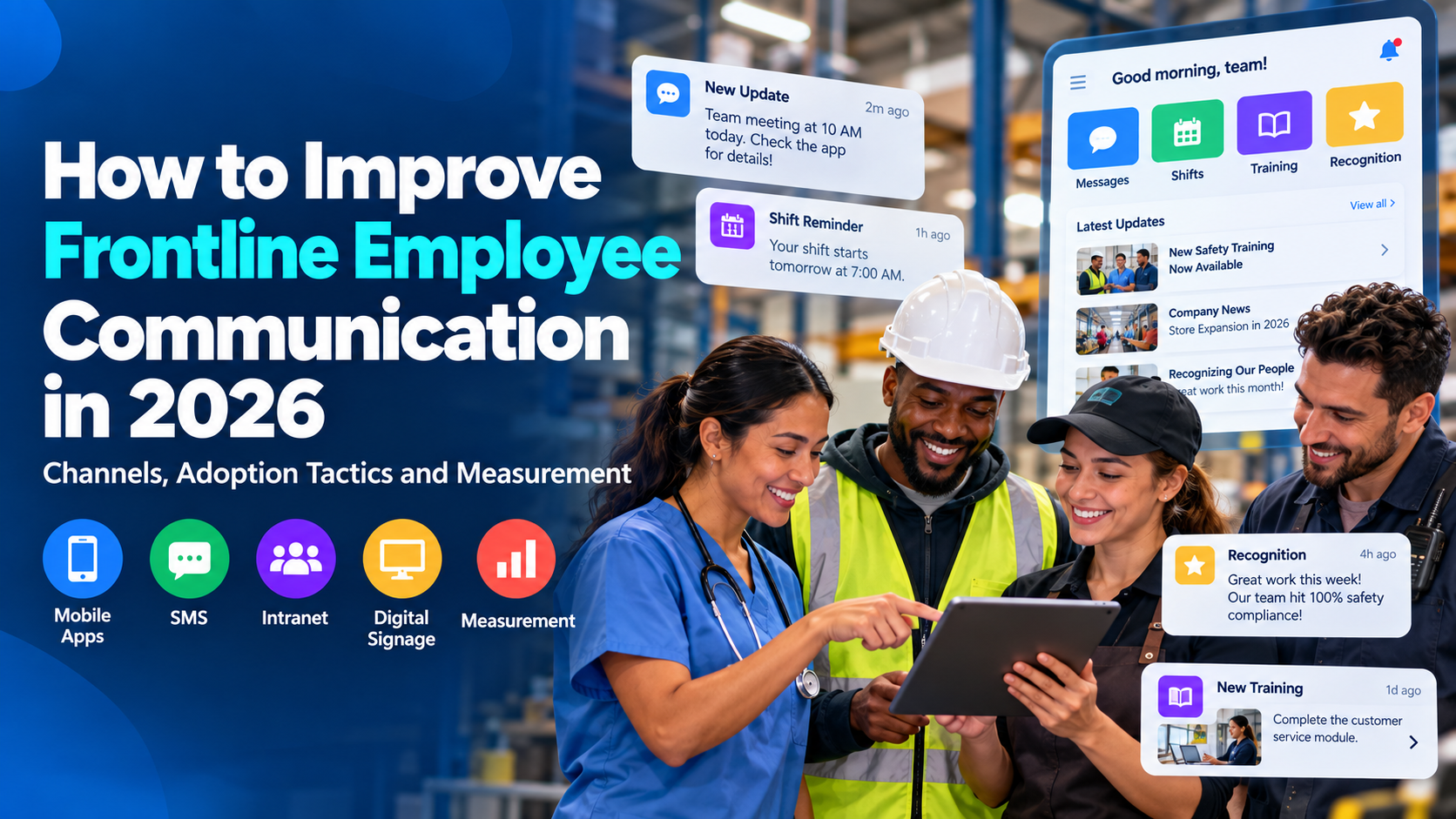
On 1 June 2026, Workplace from Meta was switched off for good. Accounts deleted, data gone if you had not already pulled it out.
Meta had named exactly one preferred migration partner: Workvivo. Not a shortlist, not a panel of recommended vendors. One. And so a very large number of internal comms teams did the sensible thing under deadline pressure. They took the supported path, ran the migration tool, moved their groups and posts and profiles across, and got on with the job.
That was roughly ten weeks ago. Long enough for the honeymoon to end and for a familiar question to start surfacing in HR and comms Slack channels: is this actually the right platform for us, or is it just the one we were pointed at?
If that is where you are, this comparison is for you. Seven platforms, what each is genuinely good at, and, more usefully, who each one is wrong for.
Quick answer: which Workvivo alternative should you choose?
Choose HubEngage if a meaningful share of your workforce is frontline or deskless and you need to reach them on channels beyond an app and a feed.
Choose Staffbase if internal communications is the function driving the decision and email remains central to how you reach people.
Choose Simpplr if you want an AI-led intranet and your workforce is mostly desk-based.
Choose LumApps if you are deep into Google Workspace or Microsoft 365 and want the platform to sit inside that stack rather than beside it.
Choose Flip if you are almost entirely deskless and want a tool built for that from the ground up.
The rest is a matter of geography, procurement constraints, and how much of the employee experience you want to run through a single vendor.
Why teams are looking for Workvivo alternatives in 2026
Workvivo is a strong product. It has been a category leader on the major review sites, it counts Amazon, Ryanair, Bupa, Virgin Group and Lululemon among its customers, and the social-feed experience it pioneered genuinely does feel closer to consumer apps than most enterprise software manages. None of what follows is a knock on the software.
The reasons people are shopping are structural rather than functional.
The migration was a default, not a decision. Workplace reportedly had as many as seven million subscribers at its peak in 2021. When Meta announced the shutdown, it pointed all of them at a single partner. Plenty of organisations made a genuine evaluation. Plenty of others simply followed the path of least resistance during a data-deletion countdown. Those are very different procurement processes, and only one of them produces confidence twelve months later.
Workvivo now serves a bigger strategy. It was acquired by Zoom in 2023, and it extends the Zoom Workplace platform. That is excellent news if you are a Zoom shop. It is a legitimate consideration if you are not. Roadmaps at acquired companies bend toward the parent’s priorities over time, and if your organisation runs on Microsoft 365 and Teams, it is worth asking whose ecosystem your employee experience platform is ultimately built to reinforce.
Feed-first design has a ceiling. Workvivo’s strength is the social feed. For a connected, engaged, desk-based population that works beautifully. For a distribution centre, a hospital ward, or a retail floor where people do not carry a laptop and may not open an app during a shift, a feed is one channel among several you actually need. This is the gap that shows up three months in, when adoption numbers plateau in exactly the population you most needed to reach.
That last point is where most of the alternatives on this list differentiate themselves.
Comparison at a glance
| Platform | Best for | Core strength | Channel coverage | Watch out for |
| HubEngage | Frontline and distributed workforces | Multi-channel reach plus platform-wide gamification | App, intranet, email, SMS, digital signage | Breadth means a longer configuration phase |
| Staffbase | Comms-led organisations | Internal comms and employee email | App, intranet, email | Recognition and social are lighter |
| Simpplr | Desk-based enterprises | AI-driven intranet and personalisation | Intranet, app | Less suited to desk less populations |
| LumApps | Google or Microsoft-native shops | Deep ecosystem integration | Intranet, app, within Workspace or 365 | Value drops outside those stacks |
| Haiilo | European and multi-region teams | Comms plus employee advocacy | App, intranet, email | Smaller North American footprint |
| Firstup | Large complex enterprises | Journey orchestration and targeting | Orchestrates across existing channels | Heavier lift, enterprise pricing |
| Flip | Almost entirely deskless teams | Purpose-built frontline experience | App, some integrations | Narrower for hybrid or mixed workforces |
1. HubEngage
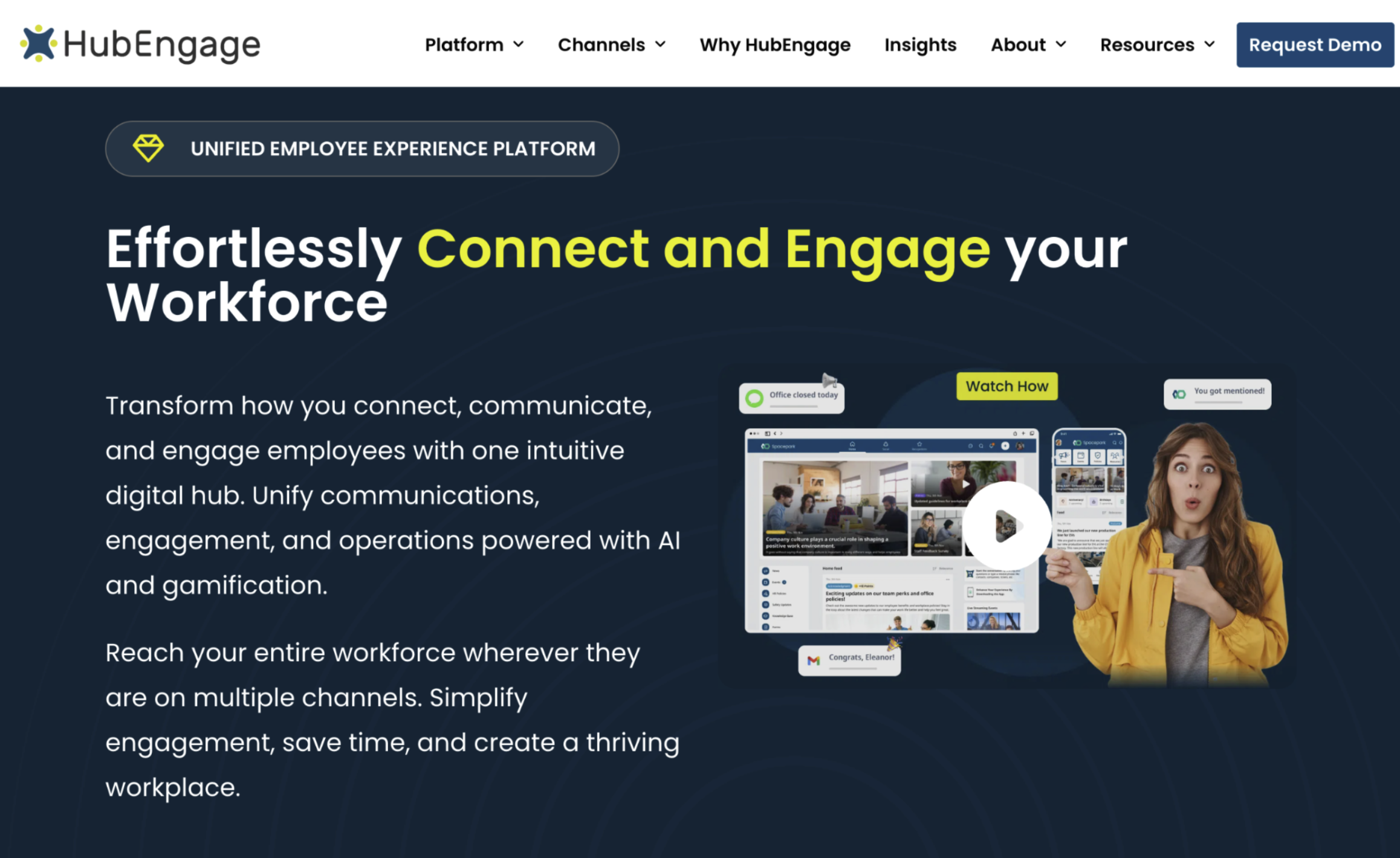
Best for: organisations where a large share of the workforce does not sit at a desk.
HubEngage is the strongest alternative on this list for the specific population Workvivo serves least well, and the reason is architectural rather than cosmetic.
Most employee experience platforms are a single channel with features attached. Usually that channel is a feed, sometimes an intranet. HubEngage is built the other way round: one message, published once, delivered across a mobile app, the web intranet, internal email, SMS, and digital signage on the floor. The platform auto-formats content for each channel, and reports back on which channels actually performed.
That matters more than it sounds. If you have people on a production line who never open an app but walk past a screen twelve times a shift, and a field team who only reliably read SMS, no amount of feed engineering solves your reach problem. Channel coverage is the problem.
The platform is modular, organised into hubs for communications, recognition, social, surveys and forms, and instant messaging, plus an AI assistant. You can take one hub or combine them, which makes it viable both as a replacement for a single tool and as a consolidation play across several. HubEngage’s own argument for the latter is that organisations spend an average of $40 per user across multiple overlapping platforms, and that most of that is avoidable.
The other genuine differentiator is gamification, and specifically how far it extends. Most platforms bolt a points system onto recognition and leave it there. HubEngage applies it across the whole experience: reading content, acknowledging a message, completing a survey, recognising a colleague. Points roll into leaderboards and rewards. Whether that appeals depends on your culture, but for frontline populations where voluntary adoption is the entire battle, it is one of the few mechanisms that reliably moves participation.
Customer base skews exactly where you would expect given the above: healthcare, retail, hospitality, manufacturing and public sector, including Extended Stay America, Sport Clips, Deaconess Health System, Pactiv Evergreen, City of Mesa and Great Dane. Compliance coverage runs to SOC, ISO, GDPR and HIPAA, which matters if you are in healthcare or handling regulated data.
Where it falls short: the breadth is real, and so is the configuration effort. A platform spanning five channels and six hubs takes longer to set up thoughtfully than a single-feed product does. If you want something live in two weeks with minimal decisions, this is more platform than you need. Budget properly for the implementation phase and it repays it.
Verdict: if the population you are struggling to reach is frontline, deskless or distributed, start here.
2. Staffbase
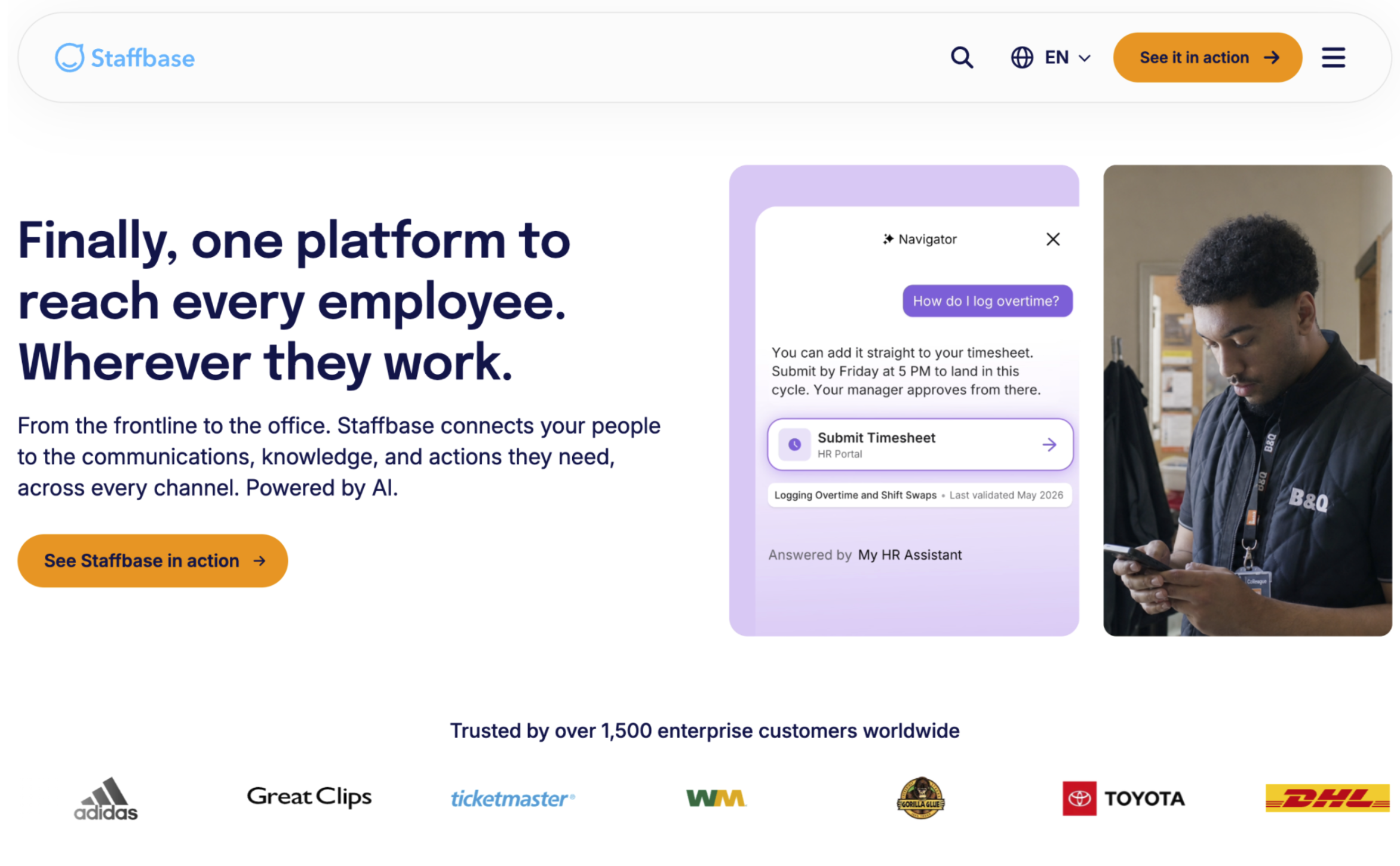
Best for: organisations where internal communications owns the platform decision.
Staffbase has built its position around the comms function specifically, and it shows in the product. The employee app and intranet are solid, but the standout is employee email, which remains the single most reliable channel in most large organisations regardless of how much anyone wishes otherwise. If your comms team currently lives in a newsletter tool and wants that properly integrated with an app and an intranet, this is a natural fit.
Where it falls short: recognition and social engagement are lighter than the comms tooling. If you want a single vendor covering recognition, rewards and peer-to-peer culture alongside communications, you will likely be adding another product.
3. Simpplr
Best for: desk-based enterprises that want an intranet with genuine AI underneath it.
Simpplr approaches the category from the intranet side and has invested heavily in AI-driven personalisation, so employees see content targeted to their role, location and interests rather than a single undifferentiated feed. For knowledge workers drowning in internal noise, that targeting is the value.
Where it falls short: the model assumes an employee with a browser, a company login and time to read. That describes a shrinking proportion of many workforces. For deskless populations it is a weaker fit than the frontline-first options here.
4. LumApps
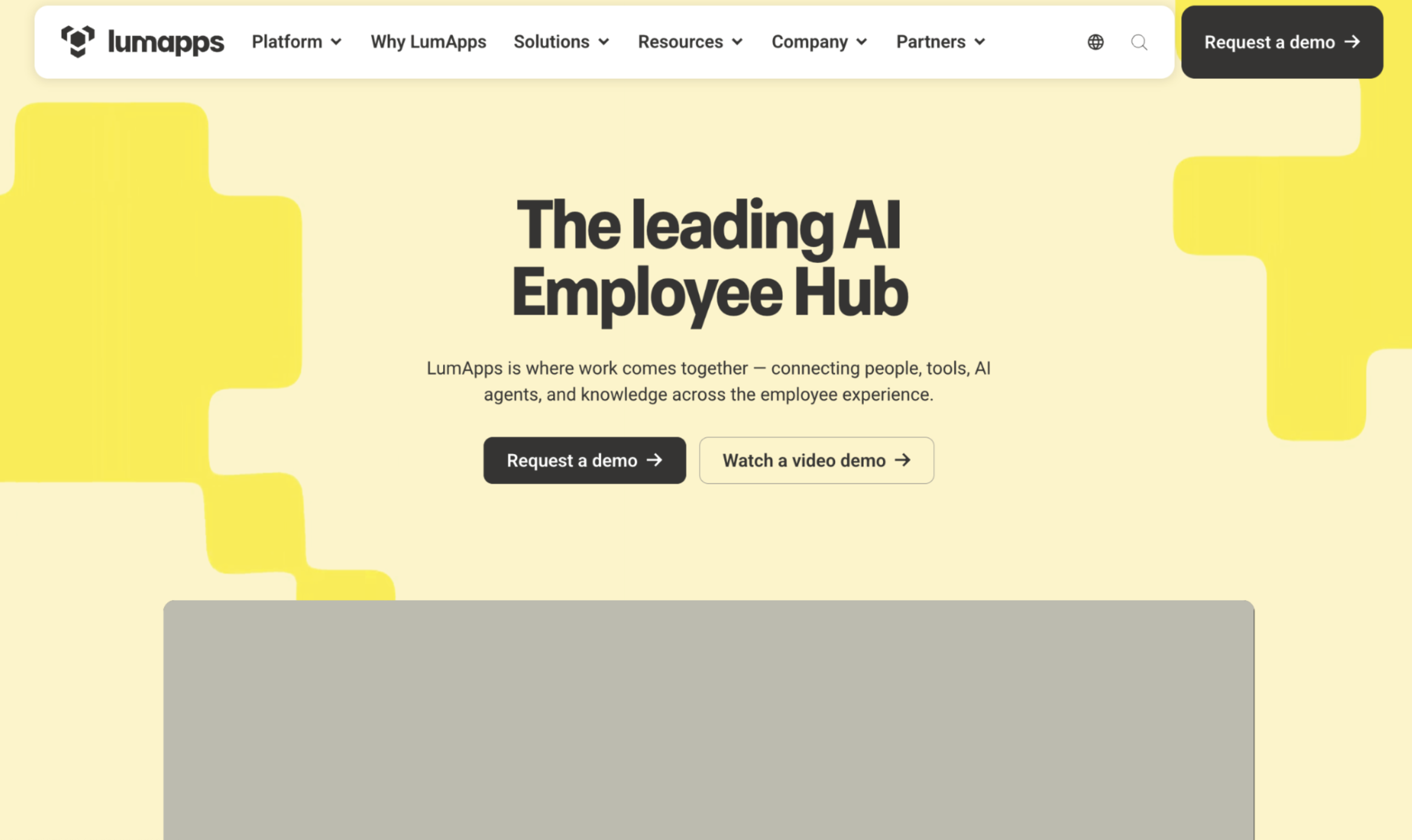
Best for: organisations committed to Google Workspace or Microsoft 365.
LumApps sits inside your existing productivity stack rather than alongside it, which is a meaningful advantage if that stack is already where work happens. Adoption problems often come from asking people to check yet another destination. LumApps largely sidesteps that by living where they already are.
Where it falls short: the proposition weakens considerably outside those two ecosystems. And if your frontline staff do not have Workspace or 365 accounts, which is common in retail, hospitality and manufacturing, the integration advantage does not reach the people you most need it to.
5. Haiilo
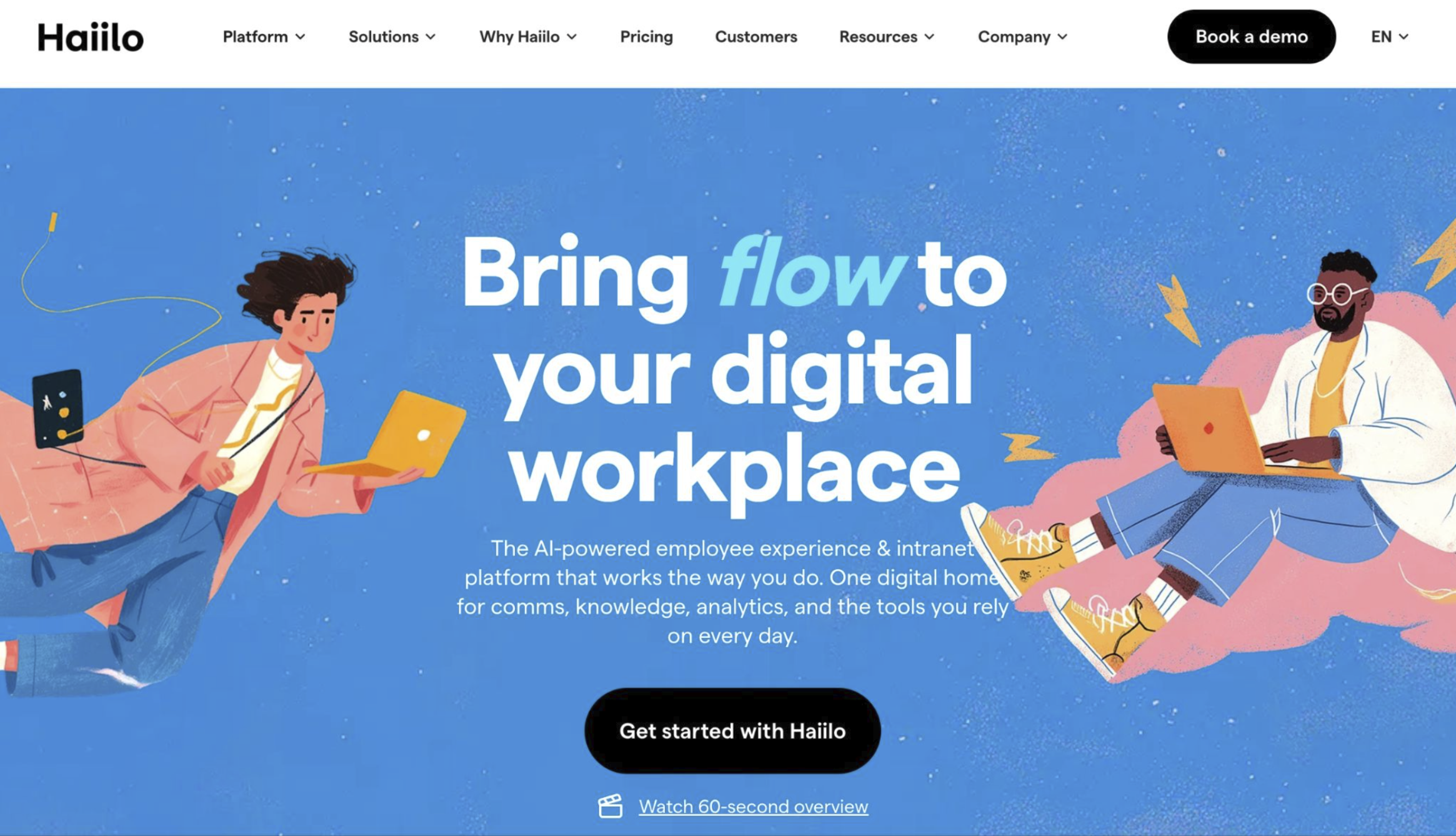
Best for: European and multi-region organisations, particularly those interested in employee advocacy.
Haiilo combines internal communications with employee advocacy, giving comms teams a route to turn internal content into external reach through employees’ own social channels. For organisations where employer brand is a live priority, that combination is genuinely useful and relatively rare.
Where it falls short: North American presence is smaller than Staffbase or Simpplr, which can matter for support coverage and reference customers. Advocacy is also a nice-to-have that quietly goes unused in plenty of deployments, so be honest about whether you will actually run it.
6. Firstup
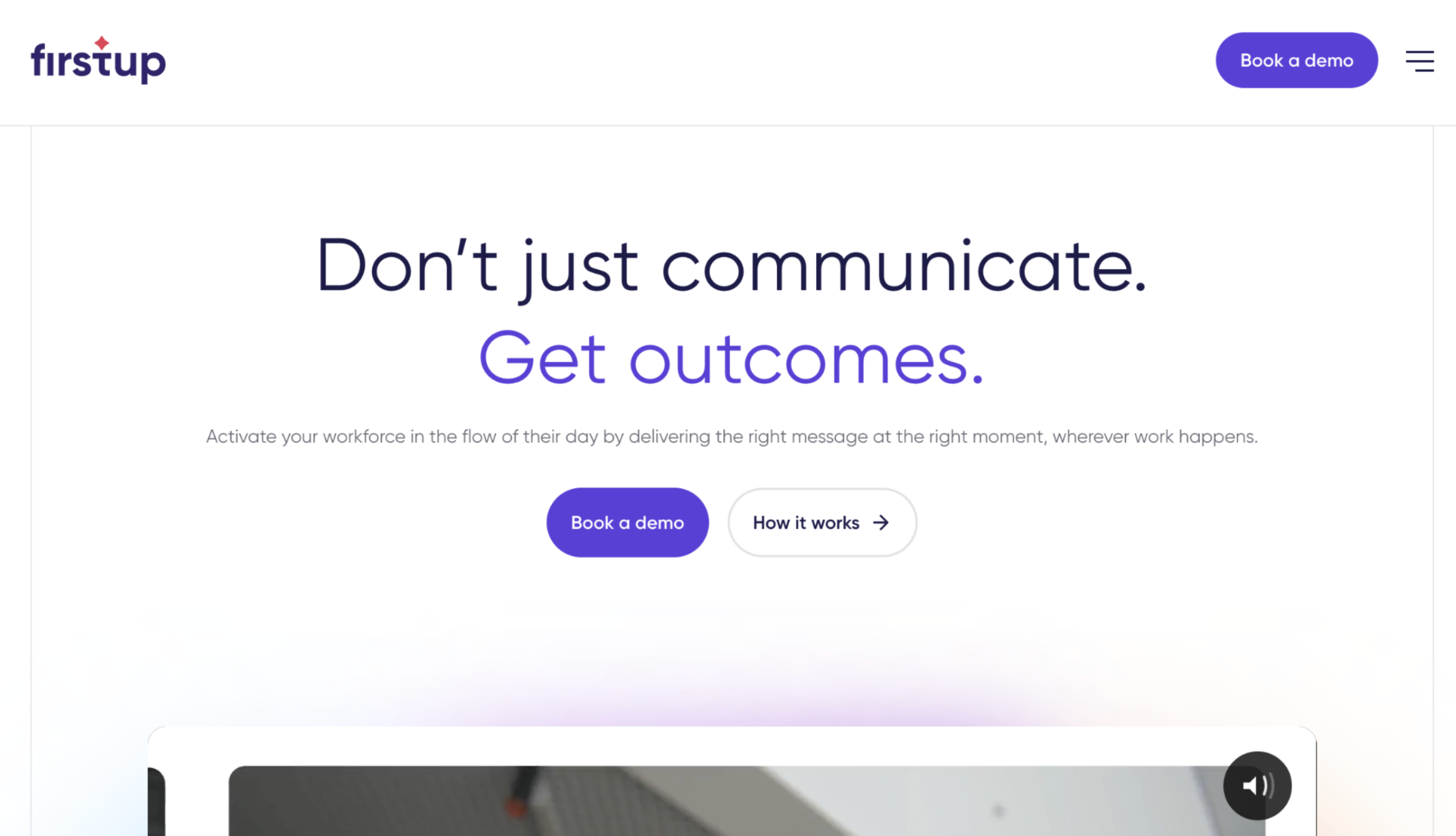
Best for: large, complex enterprises that already have channels and need orchestration across them.
Firstup is a different shape of product from most of this list. Rather than replacing your channels, it sits above them, orchestrating targeted communication journeys across whatever you already run. For a global enterprise with multiple business units, languages and existing systems, that layer can be exactly what is missing.
Where it falls short: it is enterprise software with enterprise implications, meaning implementation weight, cost, and the need for dedicated internal ownership. If you are a two-person comms team, this will overwhelm you.
7. Flip
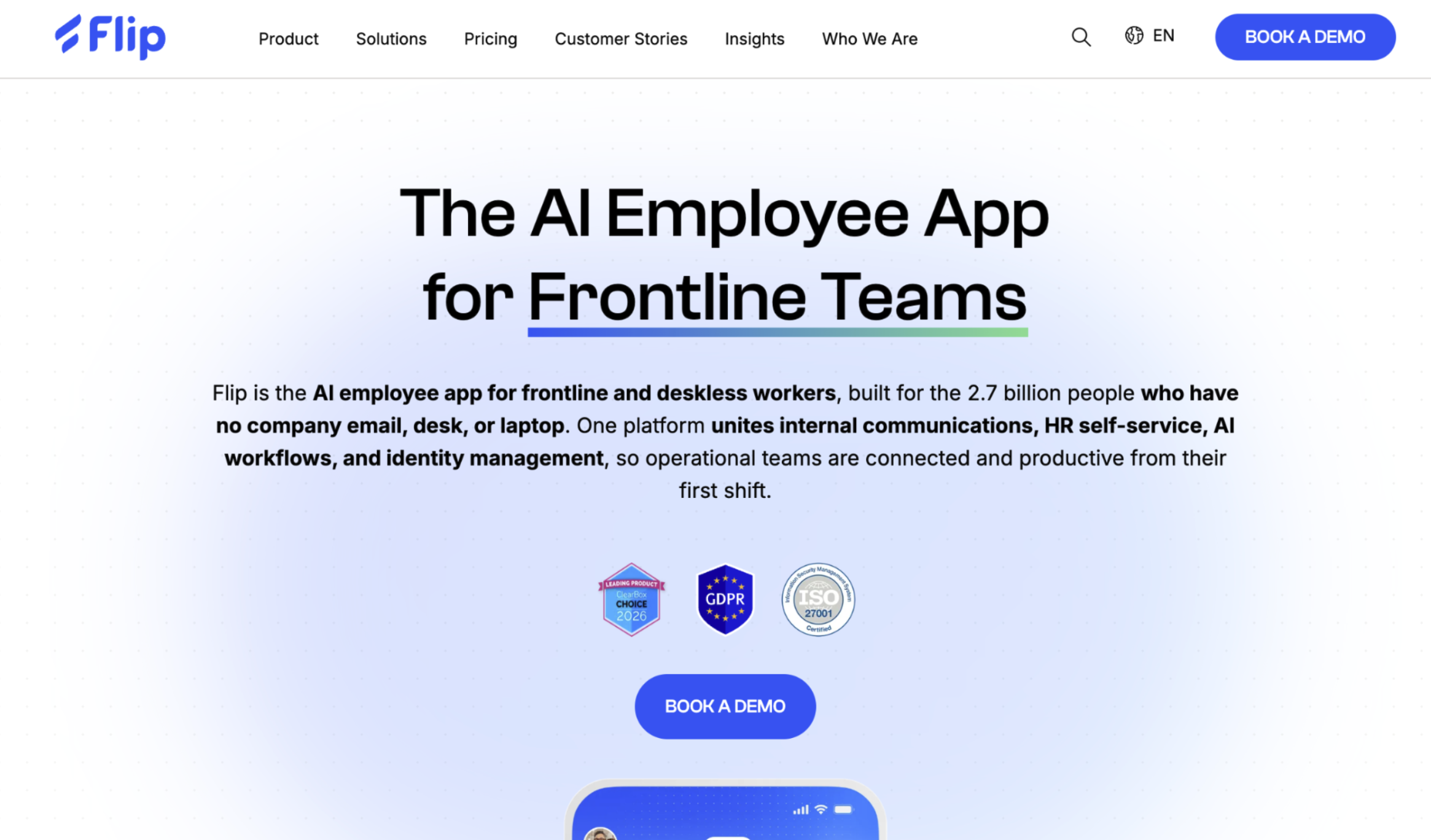
Best for: organisations that are almost entirely deskless.
Flip is built for frontline workers as the primary user rather than as an afterthought, with a mobile experience designed around shift patterns and shop-floor realities. If ninety percent of your workforce is in a warehouse, a store or a plant, the focus is an advantage.
Where it falls short: that same focus narrows it for mixed workforces. If you need one platform serving head office and the frontline equally well, a broader multi-channel option will serve you better.
How to actually choose
Every vendor on this list will tell you they improve engagement, connect your frontline, and unify your communications. Most of it is true and none of it helps you decide. Four questions will.
Where are the people you are failing to reach right now, and what device is in their hand? Not your whole workforce. The specific segment where your current numbers are bad. If they are on a factory floor without a company email address, the platform with the best feed is not the answer. Channel coverage beats feature count every time.
Whose ecosystem does this platform ultimately serve? Workvivo extends Zoom. LumApps leans on Google and Microsoft. That is not a criticism of either, it is a question about whether their strategic direction and yours point the same way in three years.
How many tools are you actually replacing? Add up what you currently pay across your intranet, newsletter tool, recognition platform, survey tool and messaging app. Consolidation economics change the comparison substantially, and a platform that looks expensive next to a point solution often is not next to five of them.
What happens if adoption stalls at forty percent? Ask every vendor this directly, because it is the most common outcome in this category and the answers are revealing. Platforms with genuine adoption mechanisms, gamification, multi-channel fallback, targeted delivery, will have a real answer. Others will talk about change management, which means the problem is yours.
That last question separates the field more than any feature comparison will.
Frequently asked questions
Is Workvivo shutting down?
No. Workvivo is very much active and was acquired by Zoom in 2023. The shutdown was Workplace from Meta, which was permanently terminated on 1 June 2026. Workvivo was Meta’s only preferred migration partner for those customers.
What happened to Workplace from Meta customers?
Workplace operated normally until August 2025, moved to read-and-download-only from September 2025 through May 2026, and was deleted on 1 June 2026. Migration tooling was provided to move groups, profiles, posts, comments and knowledge articles into Workvivo.
Can I still switch platforms after migrating to Workvivo?
Yes. Your content moved out of Workplace and into Workvivo, and it can move again. Check your contract terms and your data export options before you start, and be realistic about the effort involved in a second migration inside a year.
Which Workvivo alternative is best for frontline workers?
HubEngage and Flip are the two strongest frontline options, for different reasons. Flip is purpose-built for deskless teams specifically. HubEngage covers frontline through multi-channel delivery including SMS and digital signage while also serving desk-based staff, which makes it the better fit for mixed workforces.
Do I need a separate recognition platform?
Not necessarily. HubEngage includes recognition as a native hub alongside communications, surveys and social. Several other platforms on this list treat recognition more lightly, so if it matters to you, confirm the depth rather than the presence of the feature.
Is an employee experience platform the same as an intranet?
No, though the categories have converged. An intranet is primarily a destination for information. An employee experience platform spans communication, engagement, recognition, feedback and resources, and increasingly delivers across multiple channels rather than a single site.
The short version
If you landed on Workvivo because Meta pointed you there, you did not make a bad decision. You made the only decision available inside a shutdown deadline. But a default is not an evaluation, and now is a reasonable moment to run the one you skipped.
The single question that matters most is where your reach problem actually is. If it is desk-based staff not reading the intranet, Simpplr or LumApps will likely solve it. If it is a comms function needing better tooling, Staffbase is built for exactly that. If it is a global enterprise with fragmented channels, Firstup orchestrates across them.
If it is the frontline, the warehouse, the ward, the store floor, the people who never open the app and were never going to, HubEngage is the most complete answer here. Multi-channel delivery down to SMS and digital signage, gamification built to drive voluntary participation rather than mandated logins, and modular hubs so you can consolidate at whatever pace your budget allows.
Everything on this list is a good purchase for the right organisation and a poor one for the wrong organisation. The vendors will not tell you which you are. That part is on you.