Only 20% of employees worldwide were engaged in 2025, the lowest level since 2020, and that decline is costing the global economy an estimated $10 trillion in lost productivity, according to Gallup’s State of the Global Workplace. On the frontline, the problem is worse.
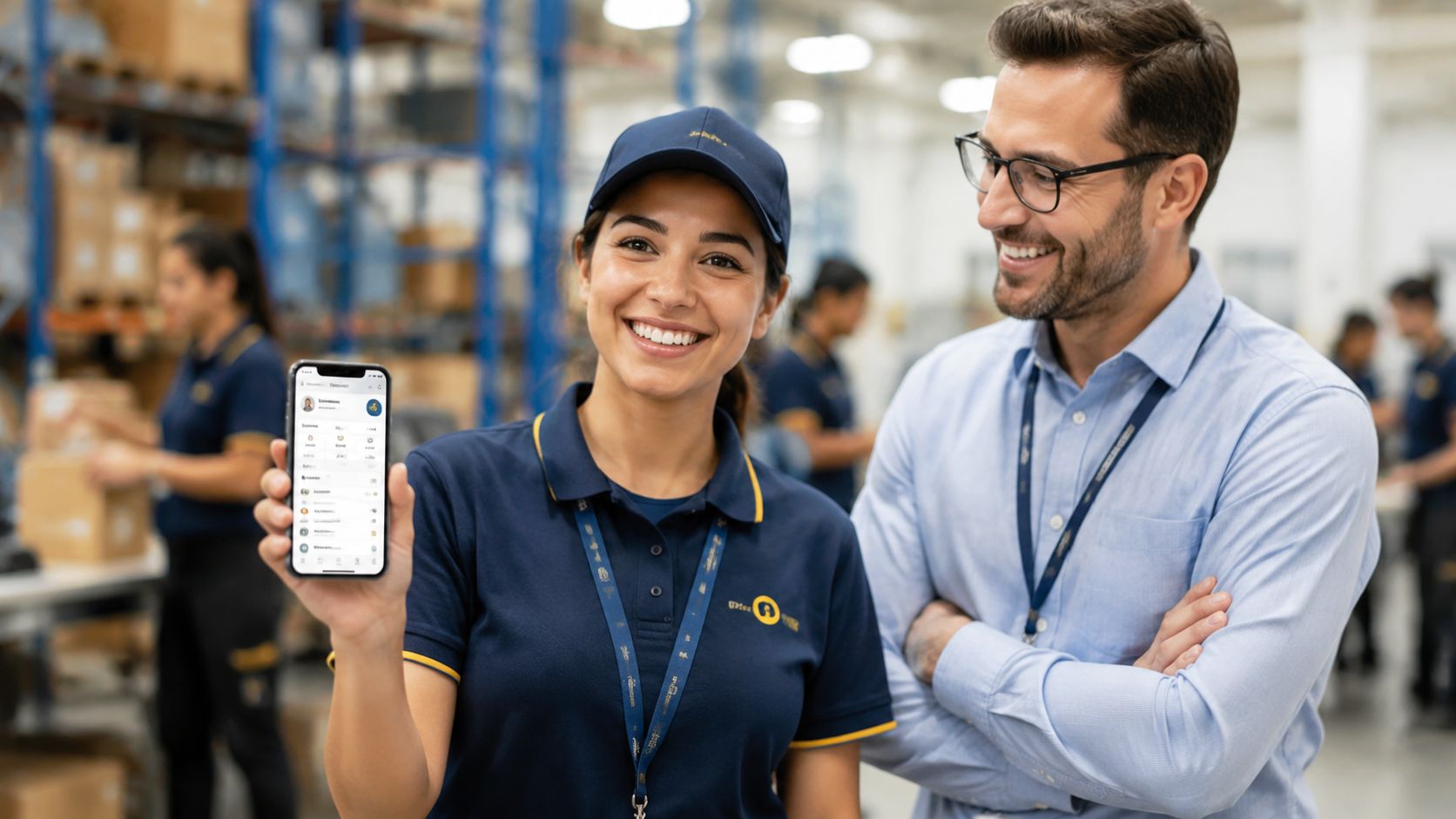
Most frontline engagement programs stall in email; a frontline employee mobile app is the more realistic channel when people do not sit at a desk.
That’s why frontline employee engagement isn’t a soft HR initiative. It’s an execution issue. If people can’t get schedule updates, find the right procedure, reach a manager, or feel heard when something breaks on shift, service suffers, safety slips, turnover rises, and customers notice. In distributed teams, engagement lives at the intersection of communication, manager behavior, operating rhythm, and the tools people can use.
A strong frontline engagement strategy doesn’t start with another app. It starts with removing friction from the work itself.
Key takeaways
- Frontline engagement is an operational discipline. It depends on communication, tools, manager support, and execution.
- Office-style engagement programs often miss the mark. Frontline teams work with different constraints.
- Mobile-first matters, but it isn’t enough. Human follow-through still determines whether messages land.
- Managers are the highest-leverage channel. If they’re overloaded, engagement drops fast.
- Operational data is often more useful than surveys alone. Early retention, ramp-up, and shift behavior reveal where friction lives.
Why Frontline Engagement Is a Critical Operations Issue
Frontline employee engagement shows up in daily execution long before it appears in an annual survey. It shows up when a nurse can’t find the latest protocol during a busy handoff. It shows up when a retail associate misses a shift change because updates went to email they rarely check. It shows up when a field technician has to call three people to confirm the right process.
That’s why this belongs in the same conversation as workforce operations. Engagement on the frontline depends on whether communication reaches people in time, whether managers have time to coach, whether schedules feel fair, and whether employees can access the knowledge needed to do the job well.
Practical rule: If workers can’t access information during the shift, leaders don’t have a communication problem alone. They have an operations design problem.
The Deep Disconnect in Frontline Work
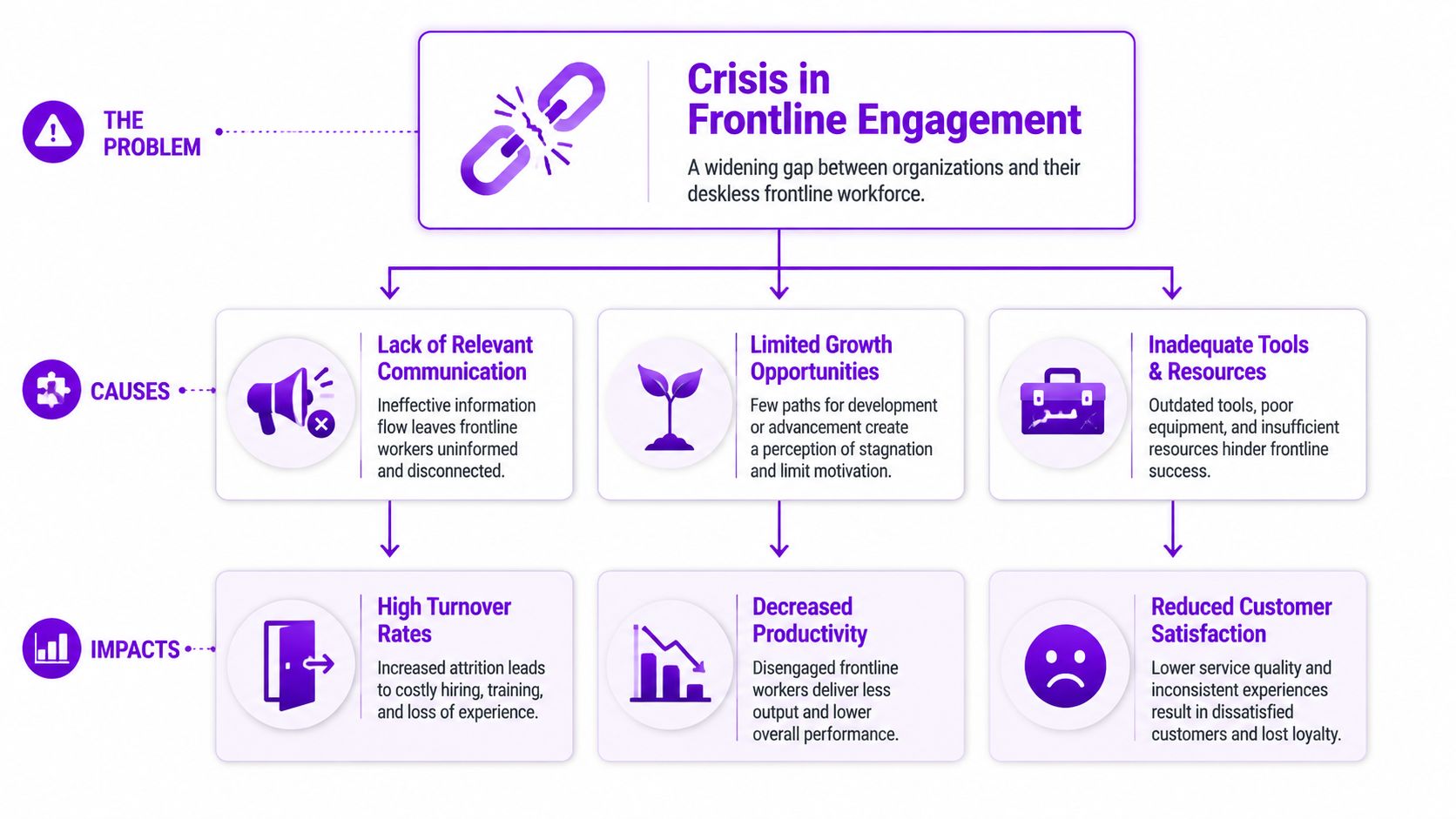
Frontline workers make up the largest part of the labor market. They account for over 2 billion employees worldwide, representing nearly 80% of the total global workforce. Traditional engagement models often don’t fit this reality because they were built around office routines, desktop access, and predictable manager availability. That’s the core challenge in workforce experience.
Why office playbooks fail on the frontline
A desk-based employee usually has email, calendar access, a laptop, and a clearer path to information. A frontline employee often has none of that during the workday. In retail, healthcare, hospitality, manufacturing, logistics, and service environments, people are moving, serving, stocking, lifting, driving, cleaning, checking, and responding in real time. They don’t have long blocks to read updates or complete surveys.
Variable schedules make things harder. So does limited overlap with managers. In many organizations, the frontline manager is also handling staffing gaps, callouts, compliance tasks, incident follow-up, and customer escalation. Employees feel the effect quickly. Communication becomes fragmented. Recognition becomes inconsistent. Training gets squeezed into spare minutes.
What the disconnect looks like in practice
The pattern is familiar across industries:
- Information arrives too late: A change in process reaches one shift but not the next.
- Knowledge lives in too many places: SOPs sit in binders, shared drives, chat threads, and someone’s memory.
- Feedback only flows downward: Workers hear what to fix, but leaders don’t hear what’s slowing the work.
- Schedules create avoidable stress: Last-minute changes make employees feel like labor inputs instead of people.
- Career conversations rarely happen: People don’t need grand speeches. They need to know what growth looks like from where they stand.
When leaders treat frontline engagement as a culture campaign instead of an operating system issue, they usually add noise instead of clarity.
The frontline doesn’t disengage because people don’t care. They disengage when work gets harder than it needs to be and nobody closes the loop.
Mobile-First Strategies for Communication and Knowledge
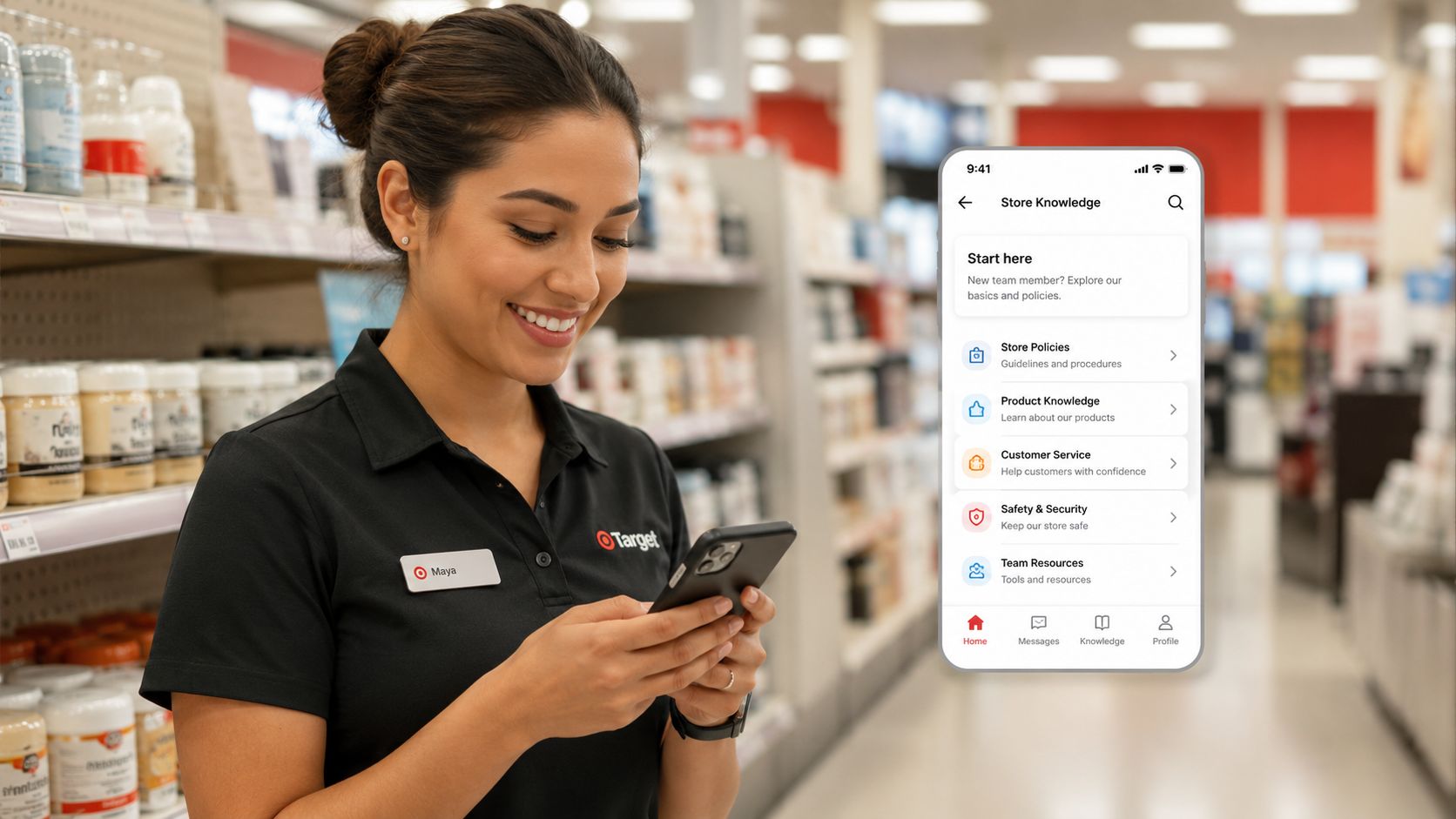
Mobile-first communication works because it meets frontline teams where they already are. But “mobile-first” shouldn’t mean “app-first at any cost.” It should mean that the most important information is easy to access, easy to understand, and tied directly to the work.
Frontline employees who report effective communication at their company are 8.2 times more likely to be satisfied with their job and 12.9 times more likely to report good or excellent well-being, according to Flip’s frontline engagement statistics. That’s why the communication layer matters so much in a workforce experience platform.
What to put on mobile first
Not every message deserves a push notification. The best frontline communication stacks are selective.
- Critical updates: Safety alerts, shift changes, location-specific notices, and service disruptions should be immediate and mobile accessible.
- Daily knowledge: SOPs, checklists, product information, escalation paths, and FAQs should live in one searchable place.
- Leadership visibility: Short video updates from leaders work better than long text memos when the goal is clarity and tone.
- Recognition moments: Peer shout-outs and manager appreciation should happen in the same flow of work, not as a separate HR event.
Tools like Workvivo, Blink, Staffbase, Axonify, and Beekeeper often come up in this category because they combine communication, knowledge delivery, and mobile access. The right choice depends less on feature lists and more on whether teams will use it during a shift.
What works better than “communicate more”
Use a simple operating cadence.
| Communication need | Better tactic | Why it works |
|---|---|---|
| Process change | Send a brief mobile alert and attach the updated SOP | Workers get the headline and the source of truth |
| Start-of-shift alignment | Give managers a huddle prompt with three talking points | Consistency improves without scripting every word |
| Repeated questions | Turn the answer into a searchable article or short video | Stops the same confusion from spreading shift to shift |
| Recognition | Tie praise to a specific action completed on the job | Makes appreciation credible, not generic |
On the ground: If employees have to ask a coworker where the latest procedure lives, your knowledge system is still broken.
Empowering Managers as Your Most Valuable Engagement Tool
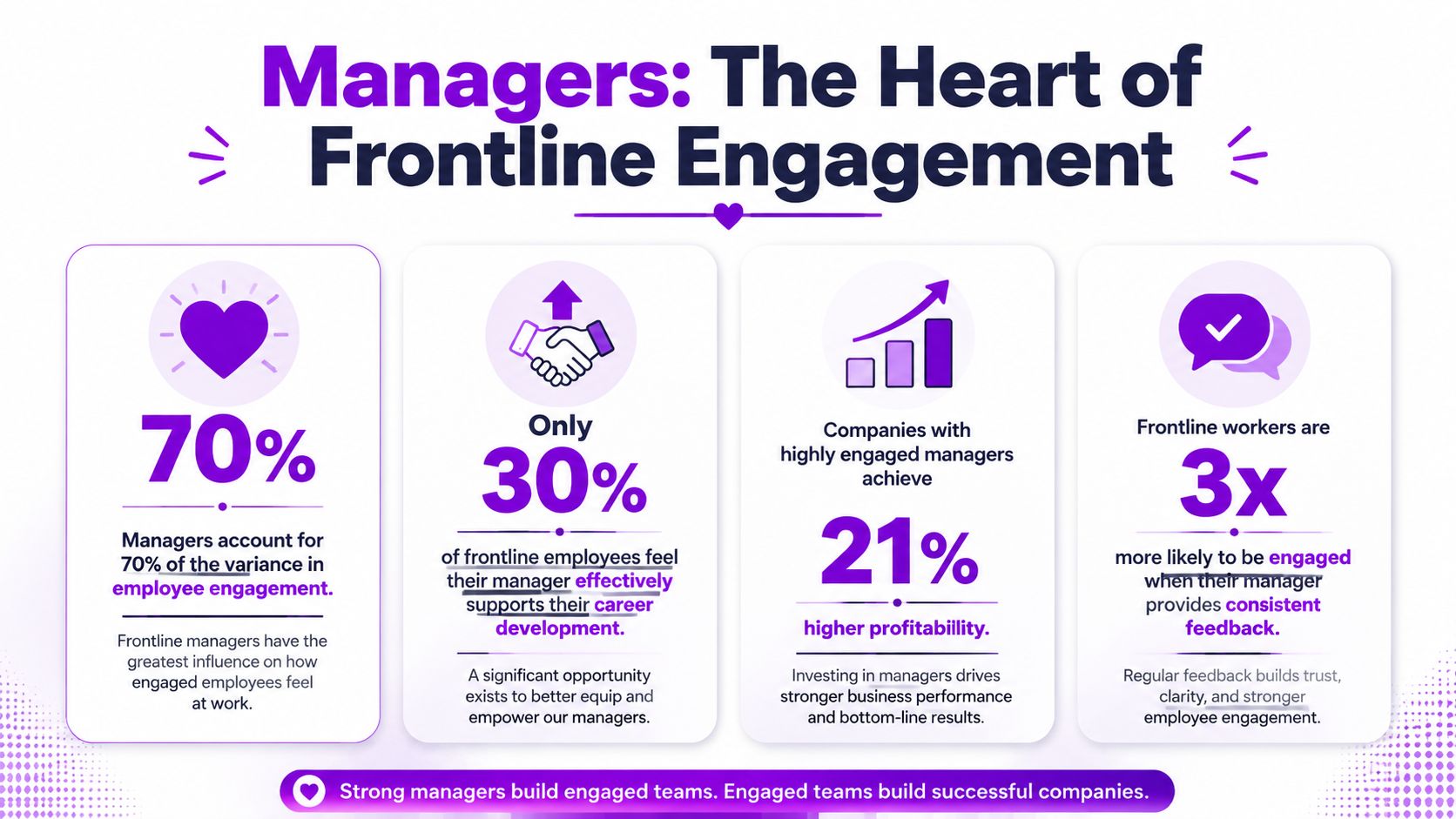
The frontline manager is still the most important engagement channel in the business. Not because software doesn’t matter, but because employees interpret the company through the manager they deal with every day.
The gap between what leaders think they’re providing and what frontline teams experience is wide. In the 2026 State of the Frontline Worker Report, the engagement gap between frontline leaders and their teams was 15 points, 72% versus 57%, and that disparity correlated with a 136% gap in “Coach” behaviors and a 95% gap in “Appreciate” behaviors reported by workers versus leaders, based on goHappy and LHRA frontline worker data. That’s the central challenge in frontline enablement, and it’s why frontline enablement should be treated as a management system, not a slogan.
Remove admin load before asking for better leadership
Many organizations tell managers to coach more while giving them no space to do it. That doesn’t work. If supervisors spend the shift firefighting schedules, paperwork, attendance issues, and compliance tasks, coaching becomes an intention instead of a habit.
Start with the basics:
- Automate repetitive admin where possible: Scheduling, reminders, and routine compliance tasks shouldn’t consume manager attention.
- Standardize manager moments: Give managers short huddle guides, check-in prompts, and escalation templates.
- Train for short conversations: Frontline coaching usually happens in two-minute windows, not formal one-hour sessions.
- Make upward listening part of the role: Managers need a simple method for logging recurring issues and closing the loop visibly.
Focus on high-touch habits
The strongest manager habits are simple and repeatable.
A good daily huddle answers three questions. What changed today. What matters most on this shift. What issue from yesterday got resolved. That last piece matters because it proves employees weren’t ignored.
Recognition also needs precision. “Good job” fades fast. “You caught the handoff issue before it hit the customer” lands because it connects effort to outcome.
Managers don’t build engagement with speeches. They build it by noticing, clarifying, and following through.
For tech-resistant environments, this matters even more. Whiteboards, printed shift notes, huddle cards, and face-to-face check-ins still beat a new platform that nobody trusts or can access consistently.
How to Measure Engagement with Operational Data
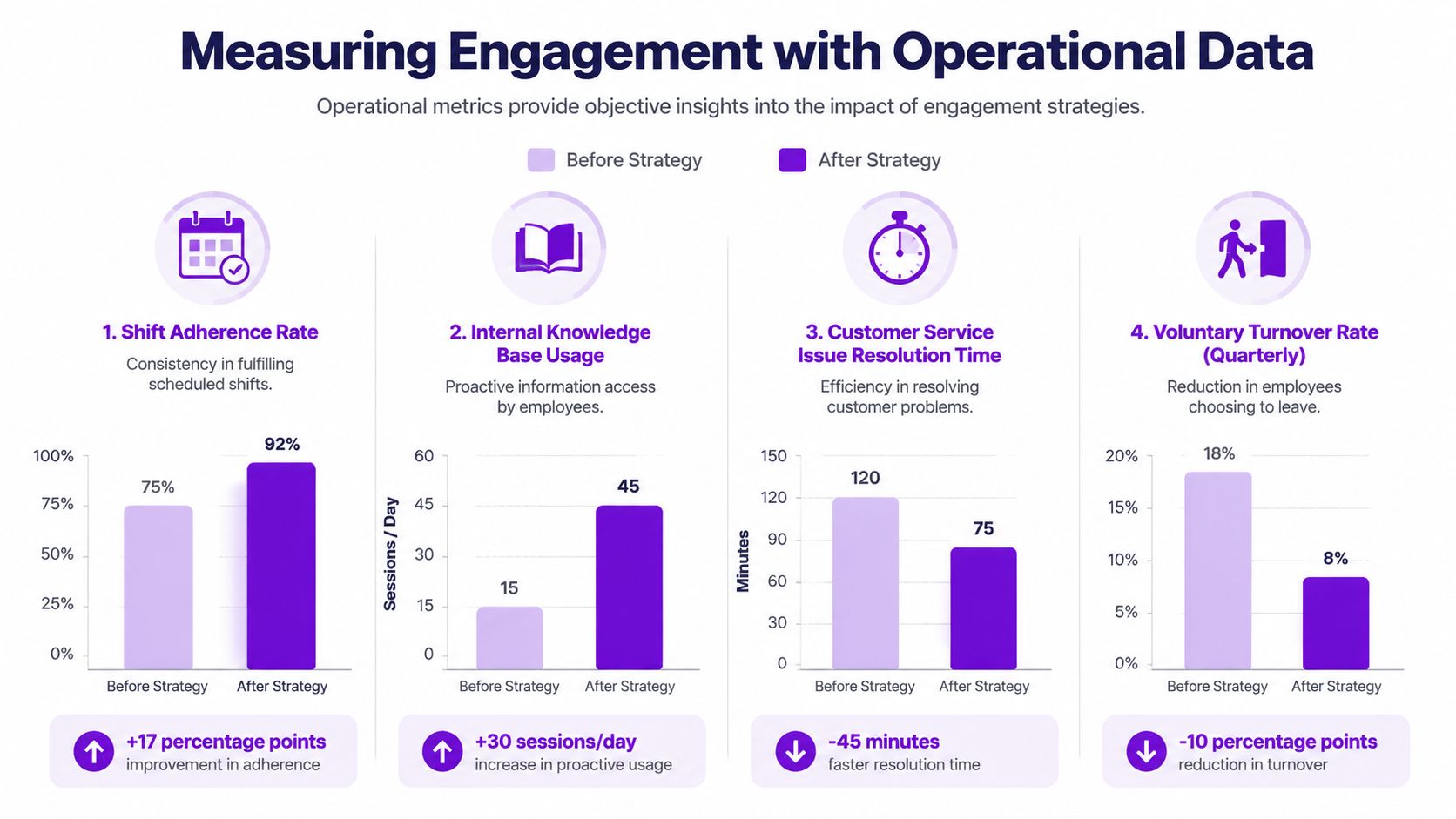
Frontline organizations often over-rely on annual surveys that office staff are far more likely to complete. That leaves leaders blind to what’s happening in the actual flow of work. The better approach is to measure frontline employee engagement through operating signals that already exist.
Organizations that track hidden operational metrics such as 30-day retention and 90-day performance scores alongside traditional scores achieve 25% higher productivity and 40% lower turnover, according to HR Cloud’s analysis of hidden metrics for frontline success. That’s why this belongs inside operational execution, not outside it.
The signals worth watching
You don’t need perfect data to start. You need useful data.
- First-week completion rates: Early drop-off often signals onboarding friction, confusion, or mismatched expectations.
- Time to productivity: If new hires take too long to become confident, look at training design and manager support.
- Schedule adherence: Repeated issues can indicate disengagement, but also unfair scheduling or poor communication.
- 30-day retention: This is one of the clearest tests of whether the early employee experience is working.
- 90-day performance trends: Strong engagement should show up in readiness, consistency, and fewer avoidable errors.
Connect metrics to interventions
The point isn’t to watch dashboards. It’s to link metrics to action.
If one location has weaker first-month retention, compare its onboarding steps, manager check-in rhythm, and knowledge access with stronger sites. If one team struggles with adherence, inspect schedule visibility and shift handoff practices before blaming attitude. If new hires stall, fix task clarity and in-the-moment support.
A practical scorecard might look like this:
| Metric | What it can reveal | Common fix |
|---|---|---|
| First-week completion | Poor onboarding or role mismatch | Simplify ramp-up and assign a shift buddy |
| 30-day retention | Weak early experience | Add manager check-ins and clearer expectations |
| Time to productivity | Training friction | Make SOPs easier to access during work |
| Recognition activity | Low visibility from managers | Build recognition into huddles and shift closeouts |
The best frontline measurement systems combine sentiment with behavior. Surveys still help. They just shouldn’t carry the whole load.
Frontline Employee Engagement FAQs
How do you improve frontline employee engagement without adding more tech?
Start with manager habits, shift structure, and information flow. A recent drop in frontline engagement from 88% to 64% in one year has been tied more to broken leadership feedback loops than to a lack of technology, according to Ben Eubanks’ analysis of the frontline engagement gap. If employees don’t trust the feedback loop, another app won’t fix the problem.
What’s different about frontline engagement compared with office engagement?
Frontline teams often have less email access, less manager time, more schedule variability, and less consistent access to company information during the workday. That changes everything. Communication has to be faster, simpler, and tied to the shift.
What should managers do every week?
Run consistent huddles, recognize specific behaviors, check whether employees can access what they need, and close at least one feedback loop. The goal isn’t more meetings. It’s more clarity and follow-through.
Can low-tech methods still work?
Yes. In some environments they work better. Printed quick guides, whiteboards, huddle cards, supervisor walkarounds, and face-to-face check-ins are still effective when they’re consistent and current.
What’s the first metric to track?
Start with one early indicator and one outcome measure. That means 30-day retention plus time to productivity or first-week completion. Those numbers reveal friction fast and give leaders something they can act on.
For more practical guidance on workforce experience, internal communication, HR technology, AI at work, and frontline operations, explore Turn On Work.