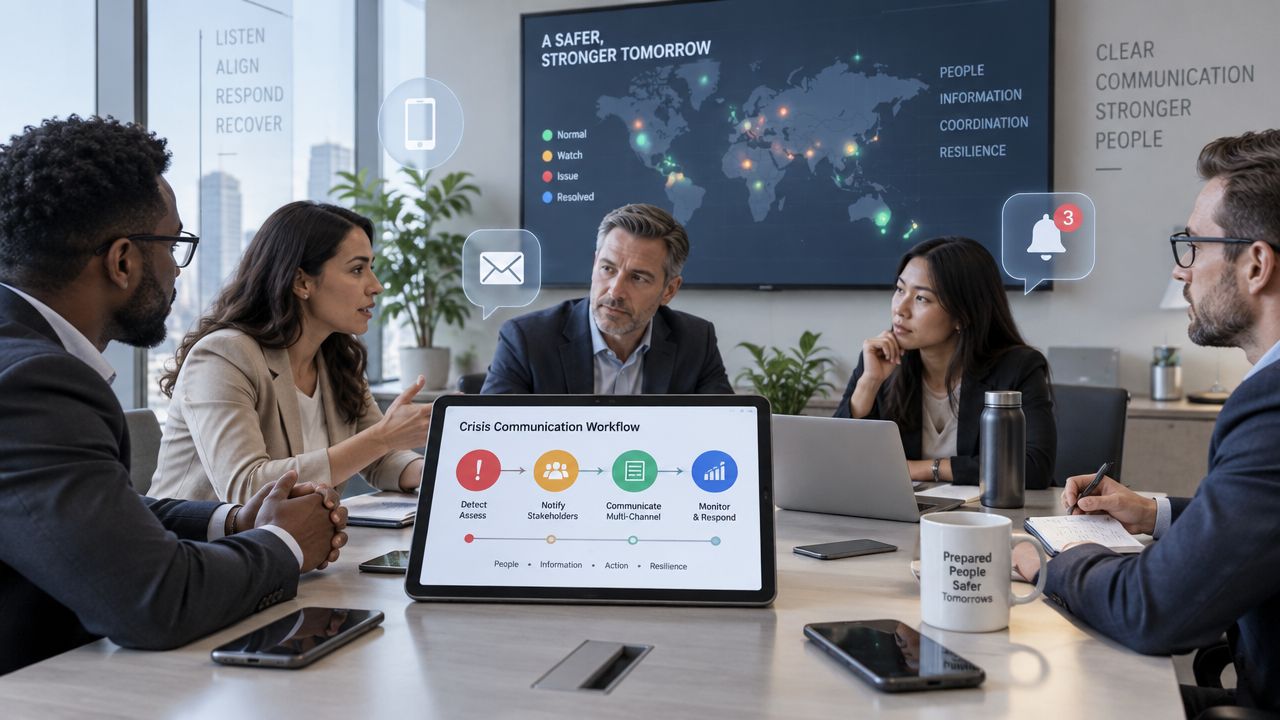
A new scheduling system goes live on Monday. Headquarters sends the polished announcement, publishes an intranet article, and shares a leadership video. By Wednesday, the night shift is asking which process applies, store supervisors are giving different answers, and associates are still swapping shifts through the old workaround. The technology launched. The change didn’t.
That gap between strategy-room intent and breakroom reality is where frontline adoption fails. A strong Change Management Communication Plan for Frontline Teams treats communication as a delivery and interpretation system, not an announcement calendar. It connects employee experience, internal communications, HR technology, AI, frontline enablement, and workforce operations so people can understand the change, act on it during a real shift, and get help when the process breaks.
Why Frontline Change Programs Break Before They Begin
A national retailer can spend weeks refining a CEO video while missing the people who need the message most. Store associates may not check email during work, supervisors may receive the briefing after their teams have already heard rumors, and night-shift workers may encounter the new process without a manager available to explain it. A message written for a desk can become unusable when someone is serving customers, working a production line, or taking a short break between tasks.
The reach problem is widespread. A 2023 frontline employee experience report found that 77% of frontline teams faced problems receiving key messages, particularly when local-site workers were involved. A separate survey reported that 32% lacked time to read or act on headquarters messages, 40% felt management was out of touch, and 42% considered headquarters communications irrelevant. Those findings point to a simple operational truth: the communication plan must fit the shift, not the corporate calendar.
The breakroom test
Frontline workers often operate in retail, healthcare, logistics, manufacturing, hospitality, and other environments where they don’t sit at a desk or regularly monitor email. They absorb change while serving a customer, caring for a patient, moving inventory, or keeping production moving. A long announcement with abstract language asks them to do the work of translation themselves.
That creates predictable failure:
- Office-first timing: Messages arrive during meetings or after a shift has ended.
- Role blindness: Associates, leads, supervisors, and union representatives receive the same explanation despite different responsibilities.
- Language and literacy gaps: A single polished version doesn’t support multilingual teams or workers who need visual or verbal guidance.
- Manager improvisation: Supervisors fill missing details with guesses, producing conflicting instructions.
- Launch-only thinking: Communication peaks at go-live and disappears when employees encounter the first real obstacle.
Operational rule: If a worker can’t explain what changes on the next shift, the organization hasn’t communicated the change yet.
Poor communication also creates workforce experience debt, the accumulated friction caused by disconnected tools, unclear processes, and repeated employee effort. A change rollout should reduce that debt, not add another layer of confusion. Turn On Work’s workforce experience debt analysis provides a useful lens for seeing communication failures as operational problems, not merely content problems.
What a Frontline-Ready Communication Plan Actually Includes
A frontline-ready plan has six connected parts. Each part closes a specific gap between receiving information and using it correctly.

Six components that prevent message failure
-
Role and stakeholder map: Define what associates, team leads, supervisors, support teams, and union representatives need to know. Include shift, location, language, access constraints, and any collective bargaining provisions that affect timing or implementation.
-
Communication objectives: Write objectives around know, feel, and do. “Employees understand the new scheduling tool” is incomplete. “Employees can submit a shift-swap request through the approved workflow before their next scheduled shift” describes an observable outcome.
-
Decision log: Maintain one controlled record of decisions, owners, effective dates, exceptions, and unresolved questions. This prevents local teams from circulating outdated guidance after the project team changes direction.
-
Channel sequence: Assign each message to a specific moment. A manager briefing may explain why the change matters, a mobile message may confirm the action, and signage may reinforce the instruction where the work happens.
-
Manager toolkit: Give supervisors talking points, a short huddle script, FAQs, escalation guidance, and examples of what stays the same. Managers shouldn’t have to convert a corporate announcement into usable instructions during a busy shift.
-
Proof of understanding: Measure recall, confidence, and observed behavior. Open rates can show delivery, but they can’t prove that a worker understood the instruction or followed the new process.
The feedback loop belongs inside the plan, not in a separate employee engagement exercise. Use SMS, QR forms, an employee app, a suggestion channel, or one-on-one conversations, then assign someone to respond and update the decision log. A practical employee listening strategy should connect what workers report with the operational changes leaders make.
The evidence supports this shift from broadcast to system design. Research on change communication found that email was the most common channel only 25% of the time, while frontline communication guidance increasingly emphasizes role specificity, repetition, and manager reinforcement. The plan should make ownership visible at location level, including a named person responsible for monitoring questions and closing the loop.
Designing the Plan in Five Working Steps
Use five working steps. Keep the outputs short enough for operations leaders to use and specific enough for communicators to produce.
Step 1, map roles and constraints
List every affected frontline role, shift pattern, location type, language need, and union contract that could affect how the message lands. Record who delivers the message, who answers questions, and who approves exceptions.
Example output: “Night-shift warehouse associates receive a visual job aid and supervisor huddle before the first affected shift. The site steward receives the implementation summary before local delivery.”
Step 2, write and test the core narrative
Draft one plain-language statement covering the change, the reason, the timing, and the immediate action. Remove project language such as “workflow optimization” if workers need to hear “scan the item before moving it to the next station.”
Test the message with two actual shift workers before final approval. Ask them what they think the organization wants them to do, what seems unclear, and what could prevent compliance.
Step 3, build the cadence calendar
Map communication to the work rhythm:
- Pre-launch: Explain the reason, impact, support, and preparation.
- Launch week: Deliver the instruction through managers and mobile channels.
- Sustain phase: Reinforce the behavior, answer recurring questions, and publish corrections.
Example cadence grid: “Monday manager briefing, Tuesday visual job aid, first affected shift huddle, mobile reminder before action, post-shift question capture, follow-up reinforcement.”
Step 4, write manager-ready materials
Prepare the supervisor script, FAQs, escalation route, and “so what for me” line for every role. Keep the first script short enough to deliver in a huddle:
“Starting Monday, we’ll use the new scheduling screen for shift swaps. The old process won’t be approved after that date. During this week’s huddle, I’ll show the request steps and collect questions. If the system rejects a request, use the support route on the posted job aid rather than creating a separate workaround.”
Step 5, define proof before launch
Choose the recall question, confidence question, and behavior check before anyone sends the announcement. A frontline employee journey mapping template can help connect each communication touchpoint to the actual moment when a worker must change behavior.
Don’t approve a rollout because the materials look complete. Approve it when the team knows how it will detect misunderstanding and who will act on the result.
Choosing the Right Channel Mix for Shift Workers
Channel choice should follow shift reality, not a generic employee preference survey. A worker may prefer email for formal records but rely on a supervisor, posted notice, or mobile alert to know what to do before the next shift.
HubEngage has a directly relevant 2026 resource on change management communication that discusses audience segmentation, multi-channel delivery, frontline workers, SMS, mobile apps, digital displays, and email.
A 2023 survey found that 57% of employers used text messaging to communicate with frontline employees, a 13-point increase from the prior year, and 70% of respondents were satisfied or extremely satisfied with the communication they received. Another survey found that frontline workers received important company information after an average of 4.5 days, with telecommunications delays reaching 7.38 days, while 27% reported conflicting communication between headquarters and local teams. Those delays make channel sequencing a change-control issue.
| Channel | Best Use Case | Cadence | Watch-Out |
|---|---|---|---|
| SMS | Time-critical reminders and action prompts | Close to the required action, preferably within 48 hours | Don’t overload workers or send sensitive detail without a secure destination |
| Supervisor briefing | Explaining why the change matters and answering local questions | Before the first affected shift and during reinforcement | Managers need scripts and a clear escalation path |
| Digital signage | Visible reminders in the physical work environment | Throughout the active rollout | Keep copy visual, brief, and easy to update |
| Employee app | Job aids, FAQs, updates, and two-way feedback | At launch and whenever guidance changes | Test older phones, weak connections, and login friction |
| Formal record, leadership context, and links to durable resources | Announcement and major updates | Treat it as a courtesy channel, not the frontline driver |
The strongest mix layers channels. Signage anchors the environment, supervisor briefings handle the “why” and exceptions, and SMS or an employee app confirms the “what” and “when.” Email can preserve the official record, but it shouldn’t carry the entire rollout.
Choose tools that workers already use and can access during the flow of work. Compare employee communication platforms using practical criteria in this employee communication tools guide, including mobile access, multilingual support, offline tolerance, targeting, feedback, and administrative ownership.
Equipping Frontline Managers as the Primary Messengers
Frontline supervisors are the only messengers close enough to translate headquarters intent into shift-level action. They know which task creates confusion, which exception occurs every Friday, and which workaround workers trust. Treating them as a distribution list guarantees message drift.
McKinsey guidance recommends building supervisor communication skills, testing messages with peer influencers, and selecting channels that fit frontline work. The same body of evidence reports that 70% of people prefer receiving messages from a direct manager rather than other channels, making manager enablement a core rollout deliverable, not a courtesy briefing. Related benchmarking reports that engaging line managers can raise transformation success from 3% to 26%, while frontline employee engagement can raise it to 28%. These figures appear in frontline change communication guidance.

Give managers tools, not homework
Every supervisor should receive:
- A 60-second huddle script: State what changes, why it matters, what happens next, and where workers get help.
- Three real FAQs: Answer the questions workers are most likely to ask, not the questions executives wish they would ask.
- A translation rule: Tell managers to adapt examples and wording while preserving the approved meaning.
- A weekly check-in template: Capture what workers understand, where the process fails, and which question needs a corporate answer.
- A rapid escalation route: Assign an accountable owner for concerns requiring a response within 24 hours.
Use a Slack or Microsoft Teams thread for rapid questions if supervisors already work there, but don’t force frontline employees into a channel they can’t access. The manager’s job isn’t to relay a paragraph. It’s to explain the operational consequence, confirm understanding, and report friction upstream.
A manager behaviors and employee engagement framework can support the broader leadership habits behind this work. For change programs, the practical standard is simple: brief supervisors before workers, give them approved language, and make unanswered questions visible until someone resolves them.
Measuring Whether the Message Landed and the Behavior Changed
Open rates answer one narrow question: did a system register delivery or opening? They don’t tell you whether a worker saw the message during a shift, understood it in the relevant language, knew the next action, or followed the process under pressure.
Use a three-layer scorecard.
Recall, confidence, and behavior
Recall asks whether workers can restate the change. Use a short pulse question: “What is the one thing that changes on your next shift?” Accept plain-language answers and review themes, not just completion volume.
Confidence asks whether workers know how to act. Ask: “If this situation happens during your next shift, do you know what to do and where to get help?” Pair the response with an optional open text field for the exact point of uncertainty.
Observed behavior checks execution. Supervisors can use a lightweight checklist during normal work, while operations data can confirm whether the new workflow is being used. A 72-hour post-launch spot check is usually more useful than a polished dashboard reviewed weeks later.
Set one adoption measure that links exposure to behavior:
Adoption rate = workers who received the relevant instruction, passed the comprehension check, and completed the required behavior, divided by workers in the affected role and shift segment.
The formula is less important than the discipline behind it. Define the denominator, record the communication touchpoint, and decide the threshold for a second communication wave before launch. If recall is weak or behavior remains inconsistent, repeat the message through a different channel and equip managers with the top observed questions.
A wider employee experience context matters here. A 2025 goHappy frontline worker survey covered 46,250 frontline workers across the US and Canada, found 64% reported being engaged, and reported a 99% turnover rate. The report links improvement with open communication, recognition, and leadership development. Communication measurement should therefore track both task adoption and the experience of receiving support.
Run the pre-mortem before launch
Two weeks before rollout, assume the change failed. Ask leaders, managers, and workers what caused it. Require a “yes” answer to every diagnostic question before launch.

Ten-item pre-mortem checklist
Leader signals
- Can the sponsor state the change and business reason in one plain-language sentence?
- Has the sponsor approved the decision log, escalation owner, and response expectation?
- Does the leadership team agree on what will remain stable?
Manager signals
- Have supervisors received the script, FAQs, job aid, and escalation route before worker communication?
- Can managers explain the “so what for me” line for every affected role?
- Have night, weekend, temporary, multilingual, and union-represented teams been covered?
- Can managers report questions through a monitored channel and see the latest answer?
Worker signals
- Have actual shift workers tested the message and materials?
- Can workers access the primary channel on the devices and connections available during work?
- Does the measurement plan test recall, confidence, and behavior rather than only opens?
| Red flag | Fix | Accountable owner |
|---|---|---|
| HQ is the only reviewer | Run a frontline validation session and revise the message | Change lead |
| Email is the only delivery channel | Add manager, mobile, and physical reinforcement | Internal communications lead |
| Supervisors hear after workers | Move the manager briefing earlier and require attendance confirmation | Operations sponsor |
| Announcement uses jargon | Rewrite with task-level language and test it with workers | Content owner |
| Translation or literacy support is missing | Produce approved language and visual variants | HR or communications lead |
| Feedback has no response path | Name an owner, service expectation, and visible answer log | Change governance owner |
| Metrics stop at open rates | Add recall, confidence, and observed behavior checks | Measurement owner |
A CDC-referenced study of frontline communication during the COVID-19 pandemic found that on-site employees often considered one-on-one communication effective, while teams relied on living documents that could be updated in real time and trusted messengers such as lead nurses or medical doctors for health-related information. The lesson applies beyond healthcare: trust, proximity, and updateability matter when conditions change quickly.
Your One-Page Frontline Communication Plan Checklist
Design week
- Confirm the role, location, shift, language, literacy, device, and union segment map.
- Write one sentence stating what changes, why it changes, and when it starts.
- Translate the core message into verbal, visual, and written formats.
- Test all formats with actual shift workers.
- Name the owner for each audience, location, channel, and escalation route.
- Create the decision log and version-control process.
Pre-launch week
- Select a primary channel and backup channel for every communication touchpoint.
- Brief supervisors before workers receive the announcement.
- Provide approved talking points, a 60-second huddle script, FAQs, job aids, and escalation instructions.
- Publish the feedback channel and assign someone to monitor it daily.
- Confirm that mobile content works on older phones and weak connections.
- Baseline the recall, confidence, and behavior scorecard.
- Run the ten-item pre-mortem with leaders, managers, and workers.
- Resolve every red flag with a named owner.
Launch week
- Deliver the manager briefing before the first affected shift.
- Use signage or visual job aids where the work happens.
- Send the mobile confirmation close to the required action.
- Capture worker questions and publish approved answers in the decision log.
- Check recall during huddles and confidence before workers perform the new task.
- Spot-check observed behavior across locations and shifts.
Weeks two through four
- Run the 72-hour post-launch behavior check and repeat it where risk remains.
- Compare questions, errors, exceptions, and adoption by role and location.
- Send a second communication wave when comprehension or behavior is weak.
- Update scripts, FAQs, signage, and app content when decisions change.
- Recognize teams that adopt the new process and share practical examples.
- Document what to stop, start, and continue for the next rollout.
Non-negotiables: Ship no frontline rollout without manager scripting, channel redundancy, and a comprehension metric beyond open rates.

FAQs on Change Management Communication Plan for Frontline Teams
What is a change management communication plan for frontline teams?
It’s a structured system for delivering, explaining, reinforcing, and measuring organizational change for workers who may not use email or sit at a desk. It assigns messages to roles, channels, shift moments, managers, and proof-of-understanding checks.
How should frontline change communication differ from office communication?
Frontline communication must be short, role-specific, mobile-friendly, repeated, and operationally timed. It should tell workers what changes on the next shift, what stays the same, what action to take, and where to get help. A long corporate announcement can provide context, but it shouldn’t carry the rollout alone.
Which channel is best for frontline change communication?
No single channel works for every moment. Use supervisor briefings for explanation and local interpretation, SMS for urgent reminders, signage for environmental reinforcement, employee apps for current resources and feedback, and email for formal records.
How can you measure communication quality beyond open rates?
Measure three layers: recall, whether workers can state the change; confidence, whether they know what to do; and observed behavior, whether they follow the new process. Use short pulse questions, supervisor checklists, and a post-launch spot check tied to the affected role and shift.
How early should supervisors be briefed?
Brief supervisors before workers receive the rollout message. They need time to understand the impact, review the FAQ, practice the script, and identify local exceptions. If managers learn at the same time as employees, workers will often treat the first rumor as the most usable source of information.
How should a plan support multilingual or low-bandwidth teams?
Create approved language variants, visual job aids, verbal scripts, and mobile content that works on older phones and weak connections. Test the materials with workers from the affected shifts, then provide a channel that doesn’t depend on continuous connectivity or a desktop login.
What should happen when workers ask a question with no answer?
Log the question, assign an owner, give the supervisor a response expectation, and publish the approved answer when available. Never leave a feedback channel unmonitored. Unanswered questions quickly become local workarounds and conflicting instructions.
How does AI fit into frontline change communication?
AI can help draft role-based message variants, generate likely FAQs, summarize worker feedback, and check new content against the approved narrative. It still needs human review for labor relations, privacy, language accuracy, operational safety, and local decision rights. The right use of AI reduces production effort while keeping accountability with the change and operations teams.
Frontline communication succeeds when employees can access the message, trust the messenger, understand the action, and complete the task under real working conditions. Build your next rollout around those four tests, then use the checklist to audit every role, shift, channel, and behavior before launch.
Take your next frontline change initiative out of the announcement stage. Assign the owners, write the supervisor scripts, select the backup channels, and schedule the recall and behavior checks this week. Use the plan above with your communications, HR technology, and operations leaders, then start your first worker validation session before approving the rollout.